

Ever notice clothes that stay fresh wash after wash? The secret is in the care labels.
Most garments hide these handy guides inside the collar or along a side seam. They are tucked away so the fabric won’t wear out.
Knowing where to look can help you avoid laundry mishaps that cost you extra money. In this post, we show you the common spots for these labels and explain what the symbols mean.
Stick with us to see how one small label can help keep your wardrobe looking its best.
Locating Care Instruction Labels on Your Garment
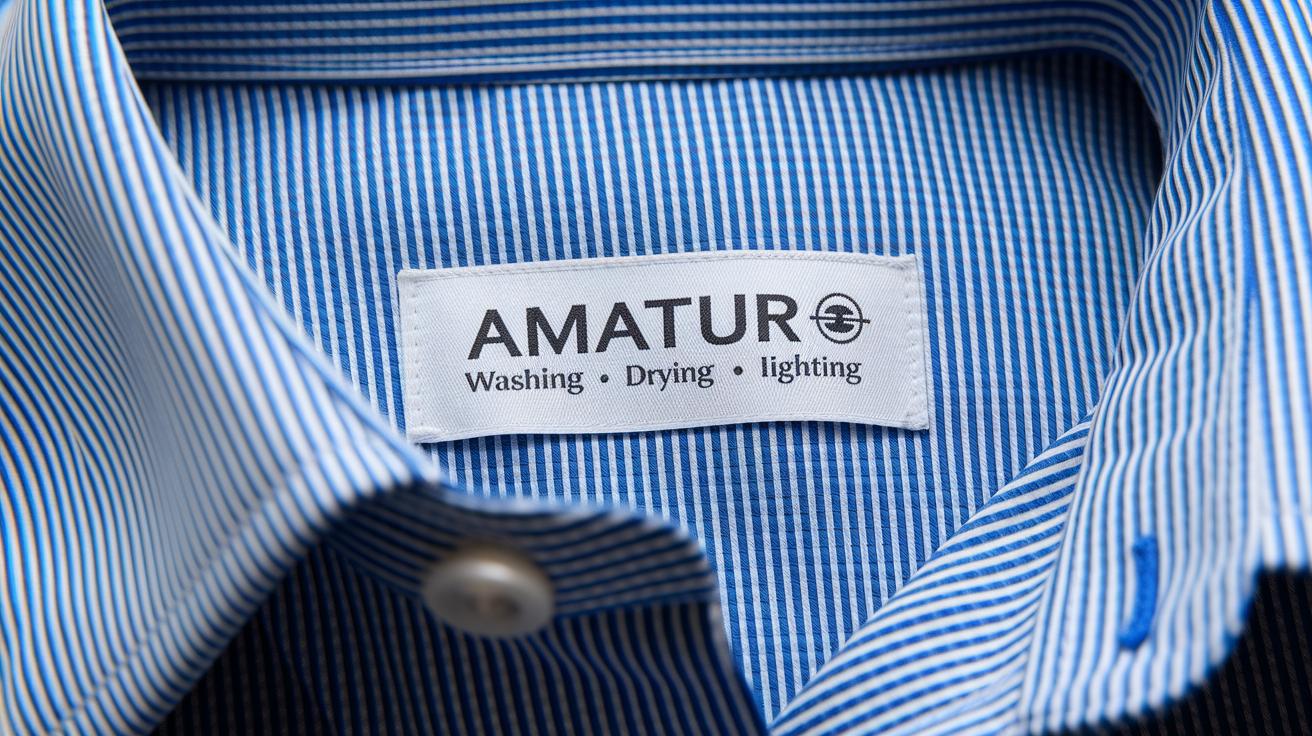
Most clothes have care instructions sewn in a safe spot so they don't get worn out but are still easy to check before washing. You will usually find these labels inside the collar or along a side seam. This keeps the label secure and hidden during normal wear but ready when you need it. Many designers even tuck these labels in the inner neckline to let you find the washing tips without affecting the garment’s style.
The label shows simple symbols for washing, bleaching, drying, ironing, and dry cleaning. It also lists fabric details, like "100% cotton" or a "polyester blend" (polyester is a type of plastic fiber). This clear guidance not only meets legal rules in many places but also helps your garment last longer. When you get a new piece of clothing, check the inner seams or behind the collar for these care instructions to keep your item looking fresh wash after wash.
Common Types of Garment Care Labels and Their Details
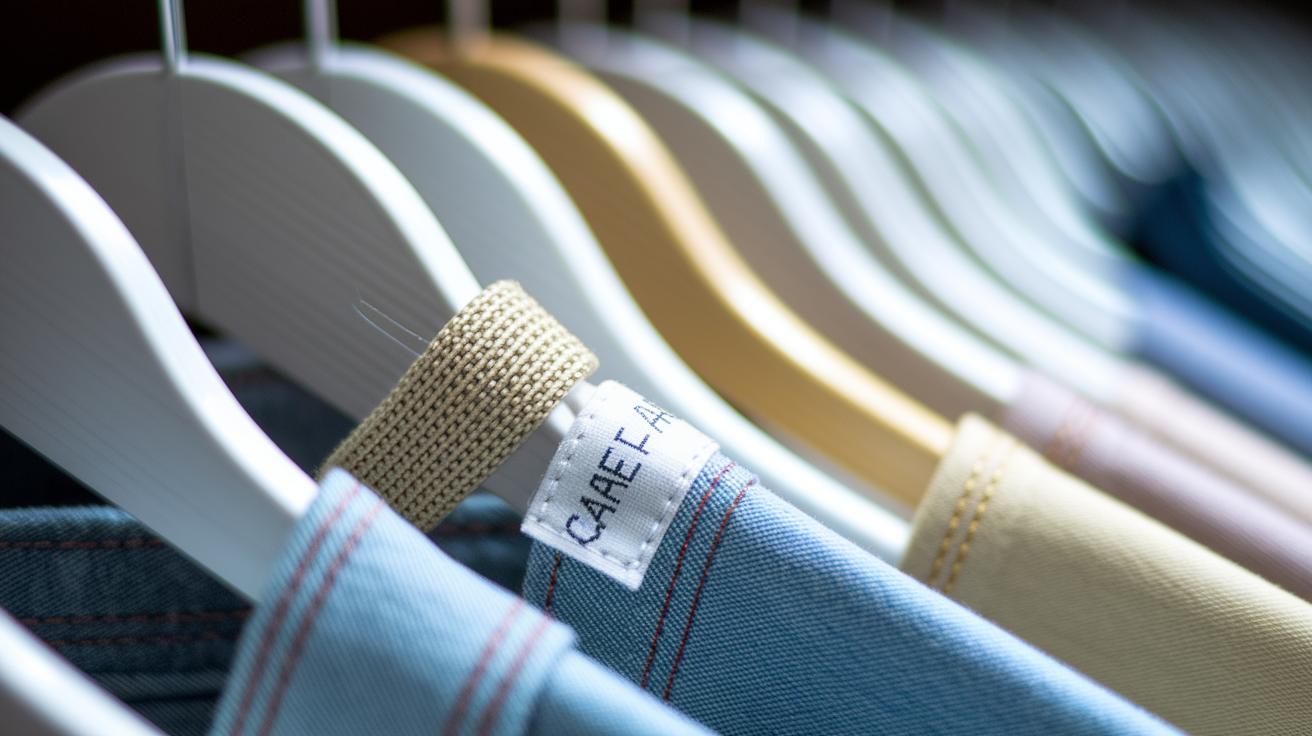
When you buy clothes, you get simple care labels that help you know how to wash and dry your garment. Woven tags are stitched right into the fabric and show clear symbols for washing, drying, ironing, and dry cleaning. Think of them as a small, sturdy instruction manual that stays legible, wash after wash.
You might also see printed paper hang tags. These tags list care instructions and sometimes add extra details like the country of origin or maker contact info. Heat-transfer decals work like stickers that blend with the fabric, still giving you clear guidelines. And then there are fold-over sewn labels, which are durable and tucked away nicely while showing all the key symbols.
Each type of label is made to withstand many washes without fraying or fading. Their clear instructions help you take care of your clothes properly so that the fabric stays fresh and the garment lasts longer.
Key details include:
- Different label formats
- Clear care symbols
- Origin and contact information
These labels guide you in keeping your clothes in top shape.
Deciphering Laundry Symbols for Washing Guidance on Apparel
Laundry symbols are a simple way to know how to care for your clothes. They were set up by groups like GINETEX and the FTC (Federal Trade Commission) in the U.S. This way, you can avoid problems such as shrinkage, color loss, or fabric damage. When you see a symbol, it tells you what to do without having to read long instructions.
For example, a wash tub symbol might show a number. That number tells you the right water temperature. If there is a hand inside the tub, it means the item needs a gentle or hand wash. Think of it as a little hint that keeps your clothes looking fresh.
Below is a quick reference table for the five main laundry symbols:
| Symbol | Meaning |
|---|---|
| Wash Tub | Shows water temperature or tells you to hand wash |
| Triangle | Shows if bleach can be used |
| Square | Shows the drying method, like tumble dry or line dry |
| Iron | Shows the highest temperature you can use for ironing |
| Circle | Gives dry-cleaning instructions |
Here are a few extra points to remember:
- The wash tub symbol can have numbers, such as 30 or 40, to set the washing temperature.
- A triangle with a cross means you should not use bleach.
- A square with dots tells you what heat setting to use if you choose a tumble dryer.
By reading and following these symbols, you can give your clothes the care they need every time they go in the washer.
Interpreting Fabric Content and Textile Upkeep Labels
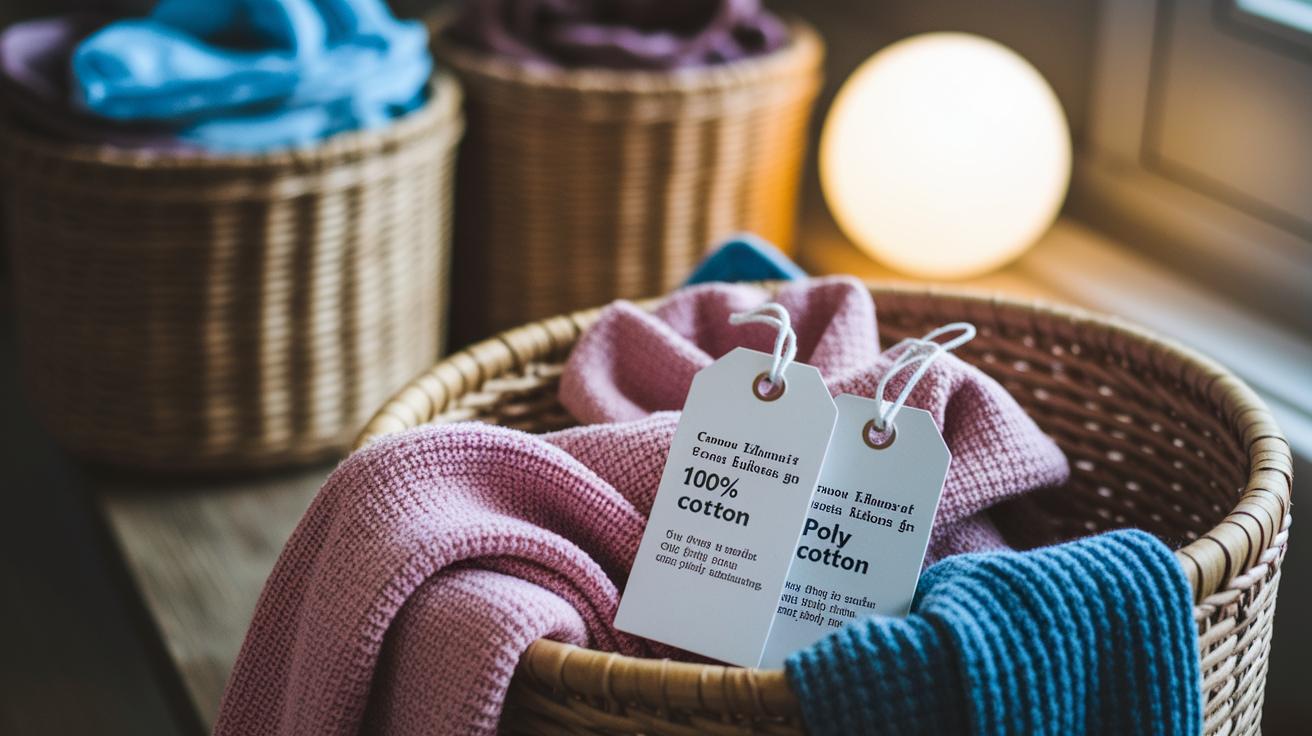
Care labels show you what your garment is made of. They might say "100% cotton," "50/50 poly-cotton," or "delicate silk." This helps you decide on the right detergent (a mild one or one without enzymes), the best water temperature (cold or warm), and how to dry it (line-dry or tumble on low) so your clothes last longer.
For instance, if you see "50/50 poly-cotton," try using a gentle detergent with cool water. I once spotted a "delicate silk" label and switched to hand washing with cold water to protect the fabric. Using these labels right helps stop your clothes from shrinking, stretching, fading, or getting damaged.
Here are some quick tips:
- Use enzyme-free detergents for fabrics that are sensitive.
- Wash delicate materials in cold water.
- Line-dry your clothes when the label asks for gentle care.
Follow your care label instructions and you can keep your clothes looking good, wash after wash.
Best Practices for Care Label Placement in Garment Design
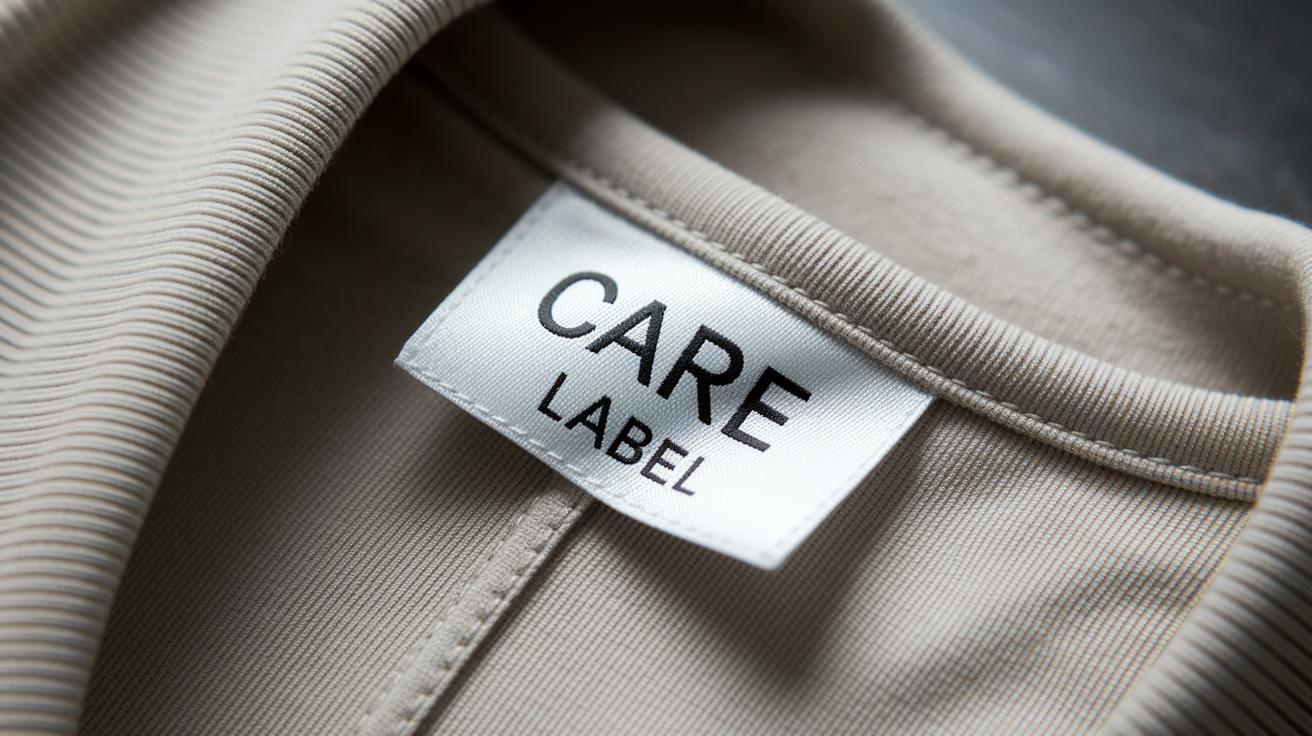
Manufacturers must follow the rules set by the U.S., EU, and some Asian countries to keep care labels strong and easy to read. They sew labels where they stay safe but don’t ruin the look of the garment. Most often, you will find these labels at the neckline or along a side seam. That way, they’re hidden during normal wear but easy to spot when you need to check the washing instructions.
To make sure the labels do their job, manufacturers use inks that do not fade (colorfast inks) and tough materials. They also run tests by washing the garment many times and rubbing the label to prove that the care marks stay clear. A label that holds up not only meets the rules but also helps customers trust that the garment can be washed as directed.
Key guidelines include:
- Sewing labels at the neckline or side seam for secure placement.
- Choosing inks and materials that do not fade or break down with regular use.
- Running wash and abrasion tests to check that the label stays readable.
- Following the mandatory standards from the law to avoid any compliance issues.
For example, after a few rigorous wash cycles, a label might still stay bright and in place, which means all the washing directions remain easy to understand. Following these steps protects a brand’s image and makes sure customers are happy with their garment care.
Final Words
In the action, we explored where care instructions are often found on a garment and learned to spot labels inside the collar or along a side seam. We broke down the laundry symbols and discussed the various kinds of tags so you can quickly match washing guidelines with care needs.
This guide helps you understand fabric content and simple upkeep for each piece. With clear care tips and easy-to-read instructions, you can confidently shop and keep your wardrobe in top shape. Happy washing!
FAQ
Where care instructions are often found on a garment NYT?
The care instructions are usually sewn inside the garment, often along a side seam or beneath the collar, so you can easily check them before washing.
Which word is commonly mixed up with fewer?
The word “less” is frequently confused with “fewer” when referring to countable versus uncountable items.
What is a slow blank primate with big eyes?
The slow primate with big eyes is the slow loris, known for its distinctive, wide-set eyes.
What term describes an array on a touchscreen NYT?
The collection of icons or options displayed on a touchscreen is typically arranged in a grid.
What is the main ingredient in tapenade NYT?
The main ingredient in tapenade is olives, which form the base of this savory spread.
Which title character says, “I’ve often seen a cat without a grin … but a grin without a cat”?
The character known for that riddle-like remark is the Cheshire Cat from Alice in Wonderland.
What was the loose garment worn by ancient Romans?
The loose garment worn by ancient Romans is the toga, a distinctively draped piece of clothing.
What is the loose garment worn over other clothes as a protection?
The loose garment worn over everyday clothes as protection is often known as a duster, designed to shield your outfit.