

Quick Verdict
Sometimes a scarf or hat feels just right without costing a fortune. It’s all about the details.
Why We Looked Into It
We noticed that quality accessories show their worth in the way they feel. A scarf that wraps softly around your hand or a hat that quickly bounces back into shape tells you it was made with care.
What to Look For
Look for a tightly woven scarf that feels smooth and snug when you hold it. Check if a hat returns to its form after a gentle squeeze. These are simple clues that the piece has been built to last.
How to Test It
Try a light tug or press gently on the fabric. If it holds its shape and feels comfortable, it’s a good sign you’re buying something that will wear well season after season.
Keep these points in mind next time you shop. A little tactile test can help you spot quality that outlasts trends and high price tags.
Comprehensive Checklist for Spotting High Quality Scarves and Hats
Before you buy, take a moment to run through this list:
- Feel the fabric with your fingers, whether it's silk or cashmere. Good silk warms up quickly, like a warm cup of cocoa on a cold day.
- Check the weight and texture of the item. A heavier, denser fabric usually means it will last longer and feel rich. Notice if a tightly woven scarf gently hugs your hand.
- For scarves, inspect the weave. It should look even and smooth, much like a neatly knit sweater with no loose threads.
- For hats, look at the seams and panels. Even, careful stitching shows the hat is built well, much like pieces coming together perfectly in a puzzle.
- Test the drape of a scarf by tossing it over your shoulder. It should hang gracefully, flowing like a light fabric in a soft breeze.
- For hats, gently bend the brim to see if it snaps back into shape. This quick test shows it will keep its form over time.
- Lastly, check the label for details on fiber content and origin. These small details help confirm that the quality goes beyond a high price tag.
Material and Fabric Assessment for High Quality Scarves and Hats
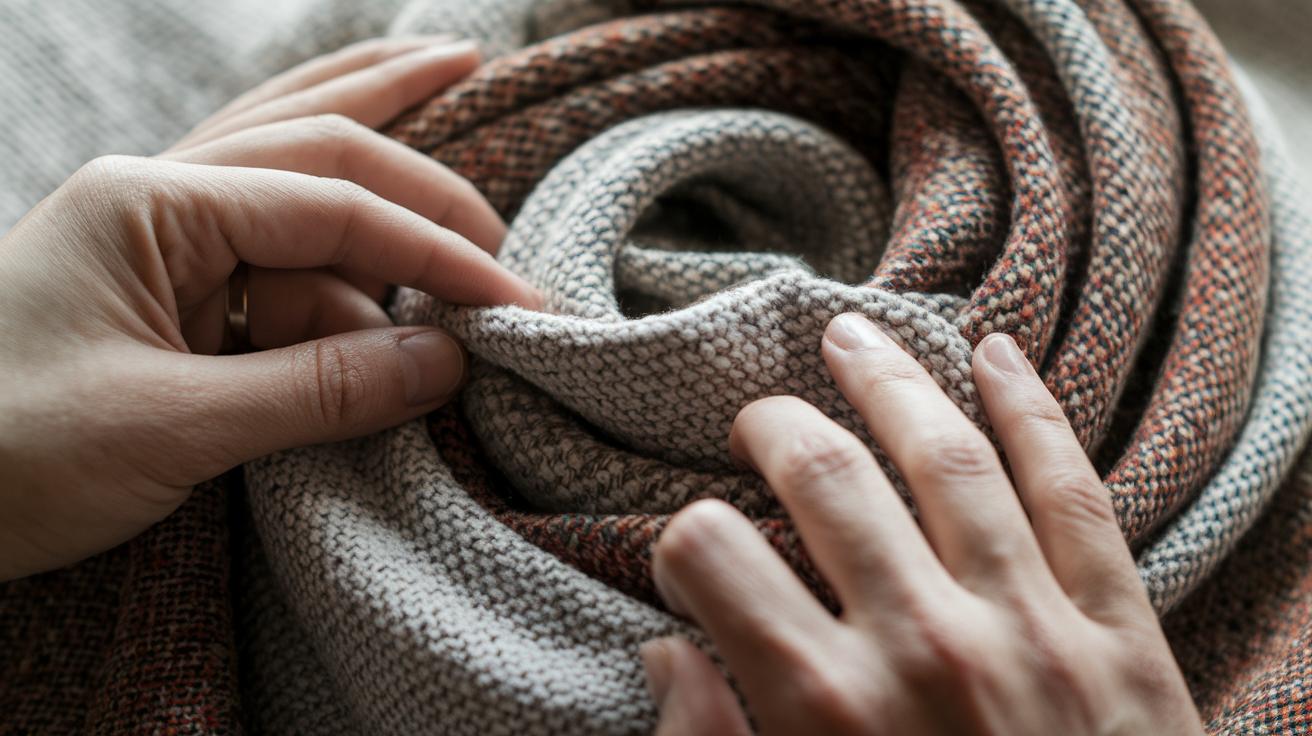
When you pick up a scarf, start by running your fingertips over the fabric. For materials like silk, wool, cashmere, or cotton blends, a simple rub lets you feel a soft glow and a little warmth, much like touching a warm stone. Check the thread count by eye, good scarves have a tight weave that keeps pilling at bay and holds its shape well. Also, look at the color in natural light. If the color seems off or dull, it might not be the best quality.
Take a close look at the weave. An even, tight weave is like a sturdy brick path, it shows the scarf was made with care. Make sure every thread locks in neatly to give the scarf that polished finish.
For hats, start by noticing the fabric type, whether it’s felt, wool, or straw. A quality hat feels substantial without being too heavy and has a true, tactile texture. Check the hat in natural daylight to see if the color stays bright and even; stable colors show good dyeing work. Run your fingers over the hat as well, if it feels uneven or flimsy, that could be a sign of lower-grade construction.
Also, keep an eye out for eco-friendly materials. Hats or scarves crafted from organic or sustainable fibers often offer better performance and have a gentler impact on the environment. For more tips on eco-friendly fabric choices, head over to the ultimate sustainable fashion buyer guide at https://jankreviews.com?p=358.
Craftsmanship Inspection in High Quality Scarves and Hats
Run your finger along a scarf’s edge to feel for hand-rolled and hand-stitched finishes. Good scarves use a single-needle hem (a stitch made with one needle that secures each thread) so no loose ends are left. It feels like a tiny piece of art when the hem is well done.
Next, check the seam allowances. They should be even all around the scarf. Even seams show that extra care went into the making of the scarf, and they help it keep its shape when worn or tied. Think of it like a painter carefully placing each brushstroke.
When it comes to hats, start by looking at the overall shape. The crown panels should be arranged evenly so the hat looks balanced. The brim should form nicely and snap back into shape after you gently bend it. Also, check the sweatband stitching. It should be neat and consistent, and the interior touches, like the lining or reinforced seams, must be done with care.
- Hand-rolled and hand-stitched scarf edges
- Single-needle hems that secure every thread
- Even seam allowances that help the scarf hold its shape
- Balanced crown panels and a precise brim on hats
- Consistent sweatband stitching and clean interior finishes
Durability and Performance Checks for High Quality Scarves and Hats

When checking if your scarf or hat is built to last, a few simple tests can show how tough they are. For a hat, try bending the brim using an angle guide. Bend it to 45 degrees and watch how quickly it springs back to flat. This reveals how well the brim holds its shape.
For a scarf, you can add a weight to pull the fabric about 10% beyond its normal length. Measure how much force it takes to bring it back. This simple stretch test shows how well the fabric recovers its shape.
To check wear resistance, gently rub high-contact areas with the same pressure for about 20 swipes. Look for any fuzz or pilling. This test helps you see if the material stands up to everyday use.
You can also hang the scarf with a small weight at one end to see how much it sags. This test tells you if the scarf can maintain its drape under light pressure.
For hats, press on the fabric using a small gauge (a tool that shows pressure). Compare the resistance across different areas. This lets you know if the hat feels sturdy and robust.
Authenticity and Brand Value of High Quality Scarves and Hats
When shopping for real designer scarves, always check the maker details. A genuine Hermès scarf comes in a 90×90 cm size, weighs about 63 grams, and boasts hand-rolled hems for a neat finish. If a scarf feels too light or features machine stitching, it could be a red flag.
Take a close look at the stitching and logo placement. For instance, Louis Vuitton scarves made with silk or cashmere blends should show even and tidy stitching. A Saint Laurent scarf must have its YSL logo placed correctly, not crooked or roughly printed. Similarly, Salvatore Ferragamo pieces are known for their distinct prints and carefully hand-finished edges. If you notice pixelated designs or uneven prints, it might be a sign of a counterfeit with rushed assembly.
Hats also follow similar quality checks. Good quality hats use sturdy sweatband materials and show solid overall construction. They tend to have consistent sizing and clear details about their origins. This kind of transparency assures you that the high price is due to careful craftsmanship rather than just the brand name.
| Brand | Key Attributes |
|---|---|
| Hermès | 90×90 cm, ~63g, hand-rolled hems |
| Louis Vuitton | Neat stitching on silk or cashmere blends |
| Saint Laurent | Properly placed YSL logo |
| Salvatore Ferragamo | Distinct prints with hand-finished edges |
Remember, a high price does not always mean top quality. It is important to inspect the craftsmanship and materials to ensure your investment is sound.
Styling and Compatibility Tips for High Quality Scarves and Hats

Accessories can change your look in an instant. When picking a scarf, think about how the fabric feels. A smooth silk scarf adds a classy touch to a fitted coat, while a chunky wool scarf looks right at home with a rugged leather jacket. These choices mix softness with structure, making your outfit feel balanced.
Color is key too. A printed scarf with bright colors livens up a neutral outfit, and a solid scarf can bring out details in a patterned coat. If you layer a scarf under a collar, you add warmth and style. Letting it drape loosely over a jacket shifts the vibe to something more relaxed.
For hats, choose shapes that complement your face. A fedora might suit angular features, while a wide-brim hat softens sharper lines. The goal is for your accessories to enhance the outfit without taking over.
- Experiment with different textures and colors.
- Consider how your hat style fits with your overall look.
Smart pairing creates a stylish, well-rounded ensemble.
Care and Preservation of High Quality Scarves and Hats
Taking good care of your scarves and hats will keep them looking fresh and feeling great. Follow these simple tips to protect your favorite accessories.
Wool and cashmere items need special care. We recommend dry-cleaning them as the label suggests. This method helps keep the fibers strong without damaging them.
Silk scarves are best treated gently. Hand-wash them in cool water and use a mild detergent to spot-clean stains. This helps remove marks while keeping the fabric safe.
Storage is important too. Fold your scarves flat or hang them on padded racks to avoid creases and stretching. For hats, use hat forms or tissue-paper inserts so they keep their shape. Also, store these items away from moths and damp areas to extend their life.
- Dry-clean wool and cashmere
- Hand-wash silk and gently treat spots
- Fold or hang scarves to avoid creases
- Use forms or tissue-paper inserts to keep hats in shape
Final Words
In the action, we broke down a step-by-step overview covering fabric feel tests, stitching checks, durability trials, and authenticity markers. We walked through how to spot quality scarves and hats, from material assessments to styling tips and proper care guidelines. These tips for spotting high quality scarves and hats help you check every detail before you buy. The review offers clear, practical advice to make smart, lasting choices that work well with your wardrobe. Enjoy putting these insights into practice and feel confident in your selections.
FAQ
What are effective tips for spotting high quality scarves and hats?
Effective tips for spotting quality scarves and hats include checking fabric feel, examining weave consistency, verifying label details such as fiber content, and inspecting stitching and finishing to ensure genuine craftsmanship.
How do I verify Louis Vuitton scarf authenticity?
Verifying Louis Vuitton scarf authenticity involves checking accurate tag details, examining stitching quality, and confirming the serial number against known markers. Genuine scarves show precise logo placement and consistent finishing.
How can you spot authentic Hermès scarves and avoid fakes?
Spotting authentic Hermès scarves entails examining the weight, hand-rolled hems, and printed details. Authentic pieces display uniform fiber quality and precise craftsmanship, while fakes often have uneven stitching and labeling discrepancies.
How can I tell if a scarf is of good quality?
Telling if a scarf is good quality means checking its fabric density, weave consistency, drape, and stitching. A premium scarf feels balanced in weight and shows uniform finishing without loose threads.
How can I make a scarf look professional?
Making a scarf look professional means draping it neatly over structured garments, pairing it with coordinated colors, and ensuring its crisp edges enhance the overall outfit for a polished appearance.
What is the best scarf brand?
The best scarf brand depends on style and quality preference. Renowned labels like Hermès and Louis Vuitton are favored for their fine craftsmanship, premium fabrics, and precise construction details that truly stand out.