

Quick Verdict: If your favorite accessory starts to show wear too soon, its material might be weak.
Why We Looked Into It: We know it sucks to fall in love with a chic piece only for it to lose its charm fast. This guide gives you simple tests to check how tough the accessory is, so you can skip short-lived disappointments.
How to Test Your Accessory:
- Feel the fabric: Run your fingers over it. It should feel smooth and not too thin.
- Check the color: Look for even color that doesn't fade easily.
- Test for strength: Give it a gentle rub to see if it resists scratches or tears.
Stick with these tips, and you'll be better equipped to choose accessories that can take the wear and tear of everyday life.
Step-by-Step Guide to Evaluating Accessory Material Durability
Start by getting your sample ready. Place the material on a clean, flat surface and take a close look at it. Check that the texture is even, the color stays the same, and there are no early signs of wear. Write down any spots that look irregular or weak.
Next, try the Martindale abrasion test. For this test, you rub a wool fabric on your sample using a pressure of 9 kPa (kilopascals, which measure pressure). Keep rubbing until you see threads breaking. Note how many cycles it takes, since more cycles mean the material is tougher.
Then, test the fabric for pilling resistance. Run your sample through sets of 500, 1,000, and 2,000 abrasion cycles. Score the fabric from 1 to 5, with a 5 meaning there is no change on the surface. This shows how well the material holds up against wear.
After that, measure tear strength using an Elmendorf pendulum (a tool that applies force to start a rip). Record the force needed to begin and continue the tear. This measure is important for accessories that will face a lot of stress.
Next, check tensile strength by placing the sample in a Tensile Tester (a machine that pulls the fabric at a steady rate until it breaks). Write down the force at which the material breaks in Newtons (a unit for force). This tells you how much strain the material can handle.
Finally, evaluate lightfastness by placing the sample in an artificial light chamber. Assess how well the color holds up on a scale from 1 to 8, where an 8 means the color barely fades. Record all your results and compare them to standard benchmarks to see how sturdy the material is overall.
Understanding Material Properties That Determine Accessory Durability
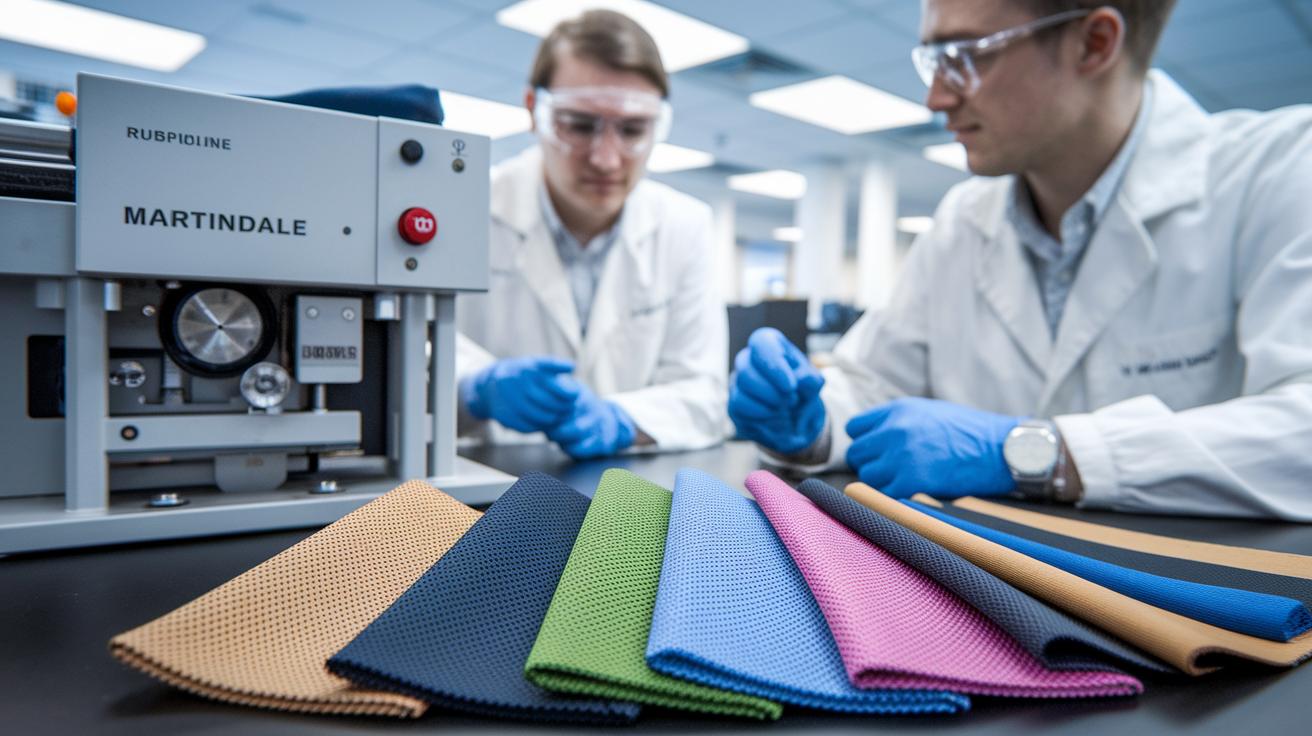
When checking if an accessory will last, we first look at abrasion resistance. This means how well the material stands up to rubbing. A higher Martindale count (a test that repeats rubbing cycles) shows the fabric can handle thousands of rubs without getting scuffed.
Next comes pilling. This looks for tiny fibers clumping together on the fabric's surface. It is rated from 1 (lots of little balls) to 5 (no change at all). If no little bobbles form after repeated rubbing, the material is likely tough.
Tear strength is also important. This number, usually between 20 and 200 N (Newtons, a unit of force), tells you how strong the fabric is when pulled apart. In the same way, tensile strength shows how much the fabric can stretch before it breaks. This depends on both the fiber type and how the fabric is made.
Lightfastness matters too. It is rated on a scale from 1 to 8, with an 8 meaning the color barely fades even after long periods in the light. Finally, chemical resistance shows if the material can deal with cleaning agents or solvents without getting damaged. Knowing these details can help you choose accessories that are built to last.
Laboratory Testing Protocols for Accessory Material Robustness
Check out our baseline guide for tests like the Martindale abrasion, Elmendorf tear, and Tensile tests. We added extra steps to dig deeper into these methods.
The Martindale test rubs fabric in a Lissajous pattern under 9 kPa (constant pressure). After 12,000 cycles, you may notice light scuff marks. This shows how the fabric stands up to wear.
The Pilling Box test now uses a new setup. Samples tumble on polyurethane tubes inside a cork-lined box to mimic everyday friction. This helps us measure early clumping or pilling of fibers.
For tear strength, the Elmendorf test drops a pendulum to start and grow a tear while recording the force in Newton-millimeters (a measure of how much force causes the tear). In the Tensile test, the fabric is clamped on both sides and pulled steadily until it fails, with the peak force noted in Newtons.
The UV Chamber Exposure test now has clear criteria: simulate sunlight at 340 nm for 100 to 500 hours. In one trial, after 300 hours, a slight color change appeared, giving a clear sign of the material's lightfastness.
Benchmarks and Industry Standards in Accessory Durability Evaluation
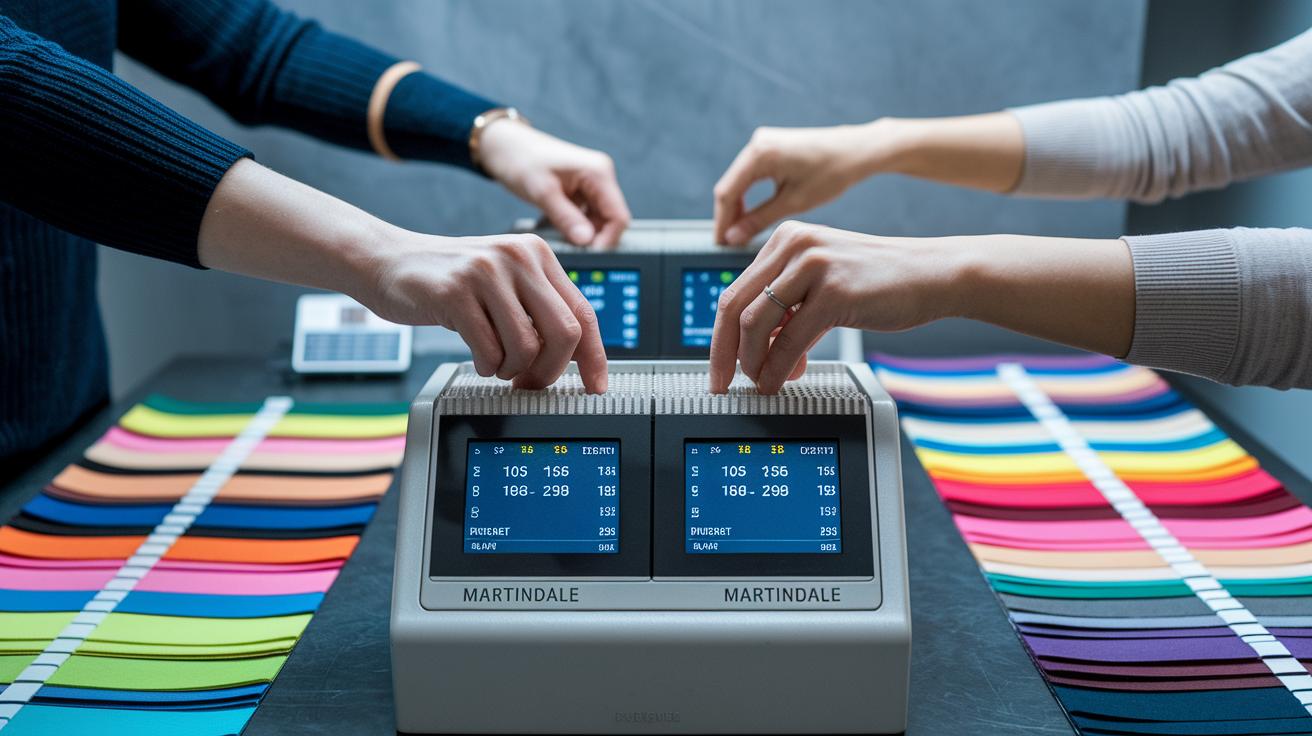
When you test an accessory, simple numbers can show if it will last. For fabrics made in the country, they should handle 12,000 or more Martindale rubs. Commercial fabrics need to pass 20,000 rubs. A pilling score of 5 after 2,000 cycles means the surface stays smooth.
For keeping colors bright, look for items that score 6 or above on the ISO 105-B02 lightfastness scale. This is key for outdoor use. Accessory leather should tear with a force between 50 and 150 newtons. Tensile strength, or how much pull it takes to break, should be between 200 and 1,000 newtons.
One tip: test a sample and see if its numbers match these guidelines. If they do, you can expect it to hold up well over time.
| Benchmark | Threshold |
|---|---|
| Domestic Fabrics (Martindale rubs) | ≥12,000 |
| Commercial Fabrics (Martindale rubs) | ≥20,000 |
| Pilling Rating | 5 (after 2,000 cycles) |
| Lightfastness (ISO 105-B02) | ≥6 |
| Elmendorf Tear Strength (Accessory Leather) | 50–150 N |
| Tensile Strength | 200–1,000 N |
If your test numbers are above these levels, the material should handle everyday use well. Use these benchmarks as a quick guide to check accessory durability.
Conducting Field and Simulation Tests for Real-World Accessory Wear
We put accessories through practical tests to see how they hold up in everyday life. First, we run wash cycles in a lab machine (an ASTM D4966 Martindale washer) to mimic daily cleaning. Try running 20 to 50 cycles. For example, after 30 cycles, you might notice subtle wear that feels like normal daily use.
Next, we check how the accessory handles sunlight and heat. We place it in a xenon arc chamber set to 65 °C for 500 hours. This test shows how well the colors and finishes resist fading and damage from prolonged exposure.
We also conduct a real-world usage study by testing the accessory over 1,000 wears. We compare pieces used in busy, high-traffic areas to those in quieter spots. This helps us see which parts are more prone to friction and pilling (small, fuzzy balls forming on the fabric).
Another step is the bending test. We subject the accessory to 10,000 cycles of bending and note when a crack first appears. This tells us how the accessory stands up to constant, everyday movement.
Lastly, we perform a three-month field survey of daily use. Observing how the accessory wears down, checking for abrasion and pilling, gives us a clear look at its long-term durability.
Each of these tests helps us understand how accessories age under normal conditions and where they might start to show wear over time.
DIY Methods and Tools to Evaluate Accessory Material Durability at Home

Try a pencil hardness test first. Use pencils graded from 6B to 6H and gently drag one across the fabric. Write down which pencil leaves the first visible mark. For example, if a 6B leaves a light mark after one pass, it shows the fabric is soft.
Next, use sandpaper. With 500 grit sandpaper, rub a small area for 50 smooth strokes. Look for any fuzzing or rough spots. If you see these, the material might wear down with use.
Then, do a weight pull test. Fasten a strap or edge of the fabric and hang a 5 lb weight on it for 24 hours. Check to see if the bond holds or if there is any stretching or coming apart.
For water resistance, try a water soak test. Submerge the accessory in water for 24 hours and then look for any swelling or layers that start to separate.
Finally, test with UV light. Place a sample under a UV lamp (365 nm LED) for 2 hours. See if the color fades or changes.
These quick tests help you understand how durable your accessory material will be over time.
Final Words
In the action, this article laid out a step-by-step guide that covers everything from lab tests and benchmarks to DIY methods for checking accessory wear. We showed you how to measure abrasion, pilling, tear, tensile strength, and lightfastness so you get a clear look at performance. The hands-on steps and simple techniques help remove the guesswork, making it easier to know how to evaluate accessory material durability. Enjoy building a wardrobe with items that are built to last and match your everyday needs.
FAQ
How to evaluate accessory material durability using PDF?
Evaluating accessory material durability via a PDF guide means using documented methods like abrasion, tensile, and pilling tests that explain step-by-step how to measure material wear and strength.
How do you test and measure the durability of a material?
Testing material durability involves methods such as Martindale abrasion, tensile pulling, tear resistance, and pilling tests to simulate wear and determine how well a material withstands stress.
What is the fabric tensile strength test method?
The fabric tensile strength test method clamps the material at both ends and pulls it steadily until it breaks, recording the force required in Newtons to determine its strength.
What is the difference between tear and tensile strength of fabric?
The difference is that tear strength measures how much force is needed to extend an existing tear, while tensile strength measures the force required to pull the fabric until it breaks entirely.
What formula is used for fabric tensile strength?
The fabric tensile strength is calculated using a formula that divides the breaking force (in Newtons) by the fabric’s cross-sectional area, giving a stress value indicative of its strength.
What is a fabric strength testing machine?
A fabric strength testing machine is a device that applies controlled forces to fabric samples, enabling measurements of tensile, tear, and other strength parameters to assess performance.
What does a tensile strength of fabric PDF include?
A tensile strength of fabric PDF typically contains detailed testing protocols, instructions on sample preparation, benchmarks, and step-by-step calculations to evaluate the fabric’s resistance to stretching.
What is tensile strength of fabric?
Tensile strength of fabric is the measure of the maximum force a material can withstand when being stretched before it breaks, providing an indicator of the fabric’s durability.