

Ever notice a spill can ruin your day? We ran simple tests on fabrics to see how they stand up to everyday messes. We washed them, shined them under bright lights, and even exposed them to sweat (a test for real-world use). These tests show which materials keep their color and fight off stains. Knowing these results helps you pick clothes that last, no matter what your day throws at you.
Clothing Stain Resistance Test Methods: Proven Performance

These tests show how fabrics handle stains from everyday use. One test uses detergent washing (ISO 105-C06 with AATCC 61) to see how well the fabric holds up. Another checks if the color transfers when the fabric rubs against itself (ISO 105-X12 with AATCC 8). There are also tests for how the color stands up to light exposure (ISO 105-B02 with AATCC 16) and to sweat (ISO 105-E04 with AATCC 15). A water immersion test (ISO 105-E01 with AATCC 107) and more advanced methods rate any color change on a scale from 1 to 5.
- Detergent washing (ISO 105-C06 / AATCC 61)
- Color rubbing (ISO 105-X12 / AATCC 8)
- Light exposure (ISO 105-B02 / AATCC 16)
- Sweat resistance (ISO 105-E04 / AATCC 15)
- Water immersion (ISO 105-E01 / AATCC 107)
- Advanced analysis
Detergent Washing Procedures in Clothing Stain Resistance Trials

We run these washing tests to mimic everyday home and laundry shop washes. Our tests follow ISO 105-C06 and use 16 different procedures (labeled from A1S to E2S) to imitate real wash conditions. For hand-washing, we use the AATCC 61 method 1A, keeping the water steady at 40°C. When we do machine washes, we use method 2A with water heated to 49°C.
After each wash, we look closely at the fabric. We check for any stains, color changes, and shifts in weight due to detergent left behind or absorbed. We rate color fade and stain transfer on a grey scale from 1 to 5. A score of 1 means there is hardly any change, while a 5 shows a big loss of color or stain marks.
Throughout the tests, we keep all settings the same. The cycle time, mix of the water (agitation), and temperature don't change so that every test is fair. This careful approach helps us understand how well the fabric repels water-based dirt and how it holds up with everyday washes.
Crocking Methods for Apparel Stain Resistance Evaluation
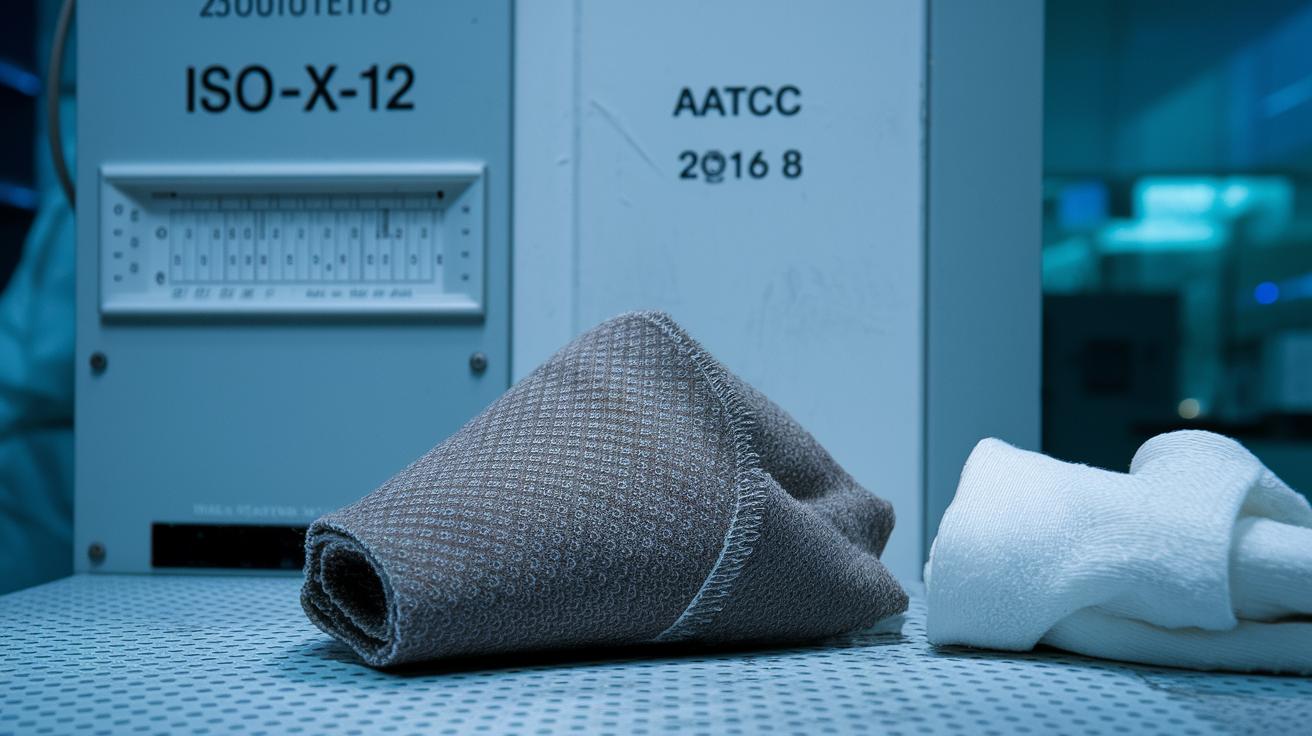
Crocking tests show how much color moves from a fabric when it is rubbed. We follow clear standards known as ISO 105-X12 and AATCC 8. In this test, a white cloth is pressed against the fabric with a force of 9 N (a measure of pressure similar to a firm press). The fabric is rubbed a set number of times under dry and wet conditions.
In dry tests, we keep a steady push to mimic the everyday rubbing from wearing the garment. When we test wet, moisture makes it easier for the dye to move, which stresses the fabric more. After rubbing, we compare both the fabric and the white cloth to a grey scale that runs from 1 to 5. A low number means little color transfer, while a higher score shows more dye bleed.
This simple, numbered method helps us clearly check how well a fabric holds its color under different conditions.
Environmental Exposure: Light and Perspiration Effects on Stain Resistance
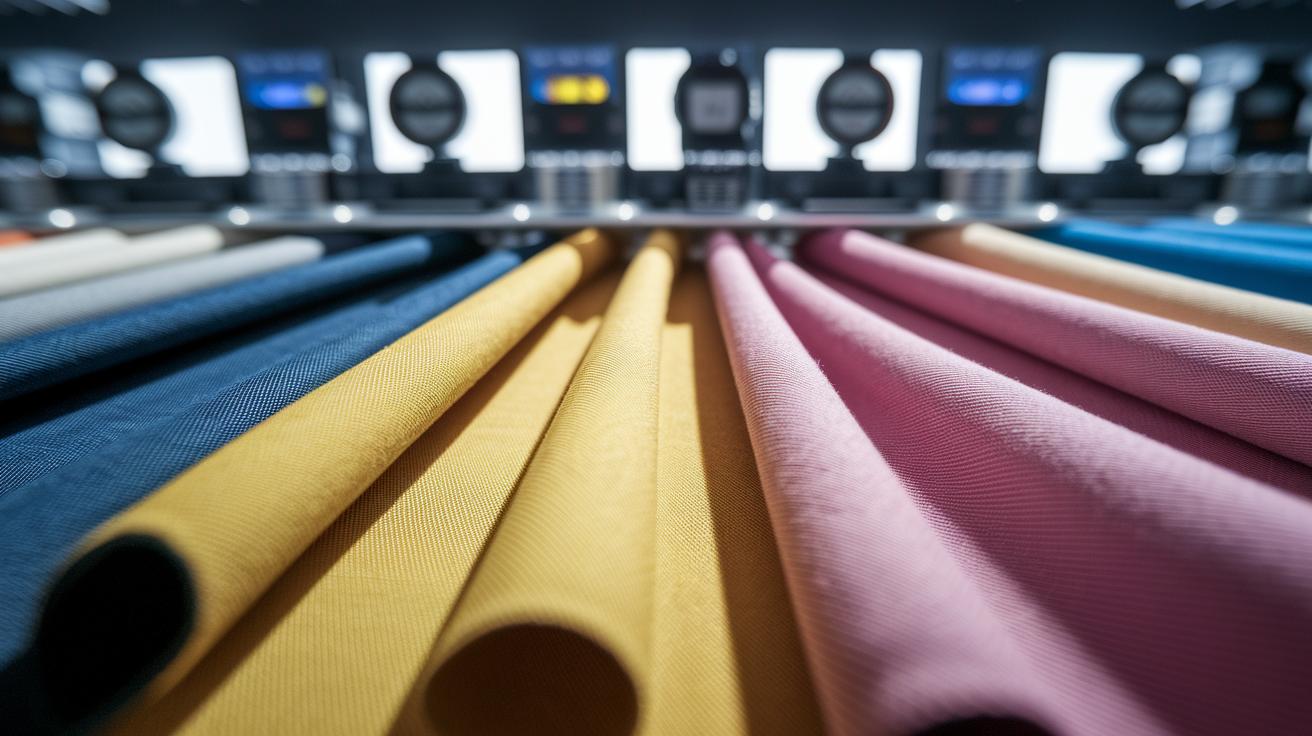
We check how the fabric keeps its color when it meets strong light and sweat. For light tests, we follow the ISO 105-B02 method. This test runs the fabric through four cycles called A1, A2, A3, and B. Cycle A2 imitates very dry air and strong light, much like a sunny, low-humidity day. We also use AATCC 16 Option 3 to create the same kind of light conditions. The fabric gets shown under both natural and artificial light, and we score any fading or spotting on a scale from 1 to 5. A low score means nearly no change.
For sweat tests, we use the ISO 105-E04 method. The fabric is soaked in a sweat-like solution under steady pressure for 30 minutes. Then it dries slowly at a warmer temperature to let any color changes show. We also run AATCC 15, which focuses only on acidic sweat. Since they dropped the alkaline test in 1974, we only measure the acid part. This shows us how well the fabric looks after touching skin moisture.
These tests give us clear, countable results with an easy 1 to 5 scale. This way, you know how the fabric will hold up in real life.
Water Immersion and Multifiber Assessment for Textile Stain Resistance
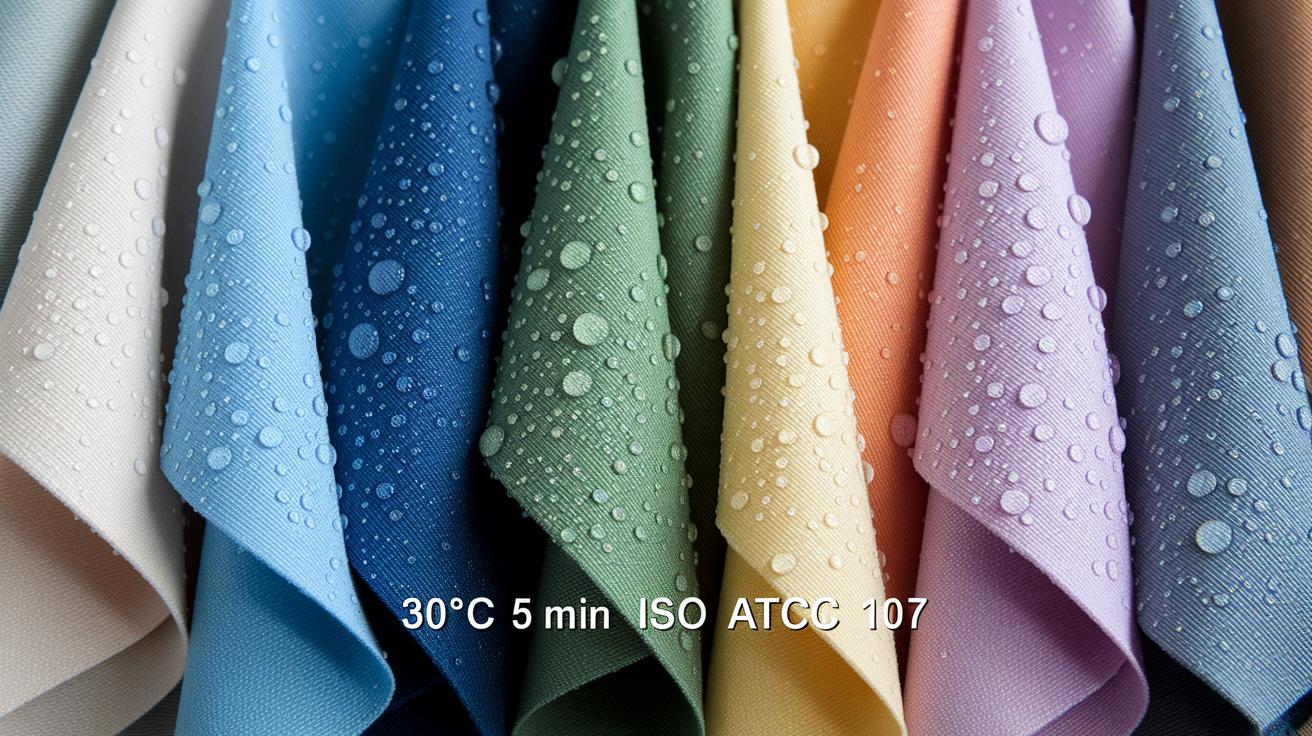
We check how well a fabric stops water-based dye from moving by placing it next to a strip made from different fibers. This test follows the ISO 105-E01 and AATCC 107 rules. First, we hang the fabric and the fiber strip side by side. Then we dip both in water kept at a steady temperature for a set time. For example, we often use water at 30°C for five minutes, which mimics a light wash.
After taking them out, we look at the fiber strip to see how much dye it picked up. We use a scale from 1 to 5 that helps us decide the level of staining. A score of 1 means almost no dye moved, while a higher score indicates more dye transfer. This straightforward test tells us how good the fabric is at blocking waterborne dyes and gives a clear idea of its colorfastness.
Advanced Instrumentation and Analytical Techniques in Stain Resistance Testing

Modern stain testing has grown a lot. We no longer just rely on simple colour comparisons. Today, we use advanced tools that measure and analyze how fabrics resist stains with careful precision. A spectrophotometer (a tool that measures colour changes) finds even tiny shifts in hue. For example, it can show a very small colour shift that may reveal a barely noticeable stain. This proves how tough the fabric is against stains.
High-resolution digital imaging now helps us by measuring the area and strength of a stain. This gives us clear numbers to back up our findings. UV fluorescence makes stains glow under special light so you can see even tiny spots of organic residue. Infrared hyperspectral imaging goes further by showing the fabric’s chemical makeup. It helps spot hidden areas of discoloration or grime.
Microscopic methods let us see up close. Tools like Scanning Electron Microscopy (SEM) and Atomic Force Microscopy (AFM) let testers inspect fabric surfaces at a small scale. These tools reveal how fibers interact and show small bumps or irregularities that might catch stains. The detailed pictures they provide give us insights that simple visual checks just can’t match.
Key methods used include ASTM D543 and ASTM F1249. These methods check things like how materials react to stress and how well they stop corrosion. Testing is done under strict conditions with controlled light and standard colour charts. A common step is to calibrate the instrument with a certified colour standard, then run a few tests to make sure results are repeatable and accurate.
- Tools to measure small colour changes (∆E shifts)
- High-resolution digital imaging to capture stain details
- UV fluorescence and infrared hyperspectral imaging to detect hidden marks
- SEM and AFM for micro-scale views of fabric surfaces
These modern techniques give us a much clearer picture of how fabrics handle stains, offering more reliable data than a simple visual check ever could.
Final Words
In the action, our guide broke down clothing stain resistance test methods. We reviewed how detergent washing, crocking, light and perspiration testing, water immersion, and advanced analysis work together. Each section showed practical steps and clear measurements to help you understand how fabrics behave. This approach gives you solid info to avoid sizing issues and return risks. With these insights, you can shop with confidence and build a wardrobe that truly fits your life. Enjoy choosing pieces that last.
FAQ
FAQs
Clothing stain resistance test methods pdf
The clothing stain resistance test methods pdf typically outlines standardized protocols such as detergent washing, crocking, lightfastness, perspiration resistance, and water immersion tests with grey-scale ratings for color change.
Best clothing stain resistance test methods
The best methods include detergent washing (ISO 105-C06/AATCC 61), crocking (ISO 105-X12/AATCC 8), lightfastness, perspiration resistance (ISO 105-E04/AATCC 15), and water immersion tests, each offering clear staining evaluations.
Colour fastness test standards
Colour fastness test standards, like the ISO 105 series and AATCC methods, establish procedures to evaluate washing, rubbing, light exposure, and perspiration effects on fabric dye stability using grey-scale ratings.
Color fastness test
A color fastness test assesses fabric’s dye stability by exposing it to washing, rubbing, light, or perspiration and then comparing the results to a grey scale to measure any color change or transfer.
Color fastness to washing test method
The color fastness to washing test method (ISO 105-C06/AATCC 61) simulates domestic laundering, evaluating how much dye is lost or transferred during washing using a defined grey-scale assessment.
Rubbing fastness test method
The rubbing fastness test method (ISO 105-X12/AATCC 8) measures color transfer by rubbing a white cloth against the fabric under set pressure and cycles, assessing stain transfer on a grey scale for both dry and wet conditions.
How to check color fastness of fabric
Checking fabric color fastness involves performing standardized tests—washing, rubbing, and light exposure—and comparing the outcomes to grey scale charts that rate the extent of any color change.
Stain-resistant finishes textiles
Stain-resistant finishes on textiles refer to chemical treatments that repel stains, and their effectiveness is confirmed through tests that simulate washing, rubbing, and perspiration scenarios.
How is stain resistance tested?
Stain resistance is tested by subjecting fabrics to methods like detergent washing, crocking, light exposure, perspiration, and water immersion, then measuring dye transfer or color change using grey-scale ratings.
Which two tests can be done to measure fabric abrasion resistance?
Fabric abrasion resistance is measured using a rubbing fastness test (crocking) and a water immersion test, both of which evaluate the fabric’s durability and resistance to dye transfer under stress.
How to make clothes stain resistant?
To make clothes stain resistant, manufacturers apply special chemical finishes that repel stains and then verify their effectiveness with tests simulating washing, rubbing, and environmental exposures.
What are the methods of colorfastness test?
Methods for testing colorfastness include washing tests, rubbing (crocking) tests, lightfastness tests, and perspiration tests, each following standardized protocols to measure dye stability against grey-scale ratings.