

Quick Verdict
Lab tests come out on top. They give more reliable and repeatable fabric results than home tests.
Why We Tested It
We all like the ease of testing fabric at home. But home tests often fall short compared to professional lab setups. Labs use exact machines and consistent conditions that you just can't match at home.
What We Found
Lab tests show clear data on color accuracy, durability, and overall fabric quality. Home tests, on the other hand, can change with the lighting and your own judgment. We ran both methods side by side to see which one proves to be more trustworthy.
Final Thoughts
If you need accurate fabric results, sticking with lab tests is the smarter choice. Home tests are convenient, but they may not always hold up when precise details matter.
Lab Testing vs Home Clothing Test Methods: Reliability and Accuracy

Lab tests and home tests for clothing give different results. In a lab, technicians use machines like spectrophotometers (tools that check how true a color is) and follow strict steps. They cut fabrics exactly the same and test them at a steady 21°C and 65% humidity. This careful method gives trustworthy numbers on things like color and fabric feel.
At home, you usually rely on what you see and basic tools like a smartphone. This can be off because of differences in eyesight and how the room lighting changes. It makes it hard to get the same result every time.
• Lab tools are carefully calibrated. They give accurate numbers, while home tools can be dicey because sensors can drift.
• Labs cut and treat samples the same way every time, so there is very little variation. At home, sample preparation can differ a lot.
• Lab tests happen in a controlled setting with steady temperature and humidity. Home tests face different conditions that can change the outcome.
• Results in labs are repeatable because machines do the work over and over under the same conditions. Home tests may change each time you check.
• Lab tests use objective measures that remove personal bias, while home tests rely on your own judgment and the environment.
For clothing makers, lab testing is key to ensuring consistent color and quality. For individuals testing at home, the convenience is great, but be aware that the results might not be as reliable as a professional setup.
Lab Testing Procedures for Apparel: Color and Durability Analysis

Standards keep our tests fair and consistent. We cut and condition every fabric sample at 21°C and 65% relative humidity so that each one starts from the same point. This way, we can trust the data on color changes and durability. We use tools like colorimeters (devices that measure color) and spectrophotometers (instruments that track reflectance and exact color) that are carefully calibrated. These tools help us compare results across different tests.
| Test Name | Equipment | Purpose |
|---|---|---|
| Light Fastness | Xenon Arc Tester/UV Chamber | Simulates sunlight to see how quickly color fades |
| Wash Fastness | Launder-o-meter | Tests fabric strength with set detergent cycles at 40–60°C |
| Crocking (Dry) | Crocking Tester | Measures color transfer under 9 N pressure when dry |
| Crocking (Wet) | Crocking Tester | Checks for color transfer when moisture is present |
| Perspiration Fastness (Acidic) | Controlled Incubator with pH 4.5 Solution | Assesses color changes from acidic sweat conditions |
| Perspiration Fastness (Alkaline) | Controlled Incubator with pH 8.3 Solution | Evaluates how well color holds up against alkaline sweat |
We keep a steady lab environment to lower any measurement differences. Every test runs at the carefully controlled 21°C with 65% humidity. These conditions make sure that any change in color or durability is all about the fabric and not outside factors. With controlled light, temperature, and humidity, our results are clear and repeatable. This helps manufacturers and testers fix any quality issues with confidence.
Home-Based Clothing Test Methods: DIY Fabric Experiment Techniques
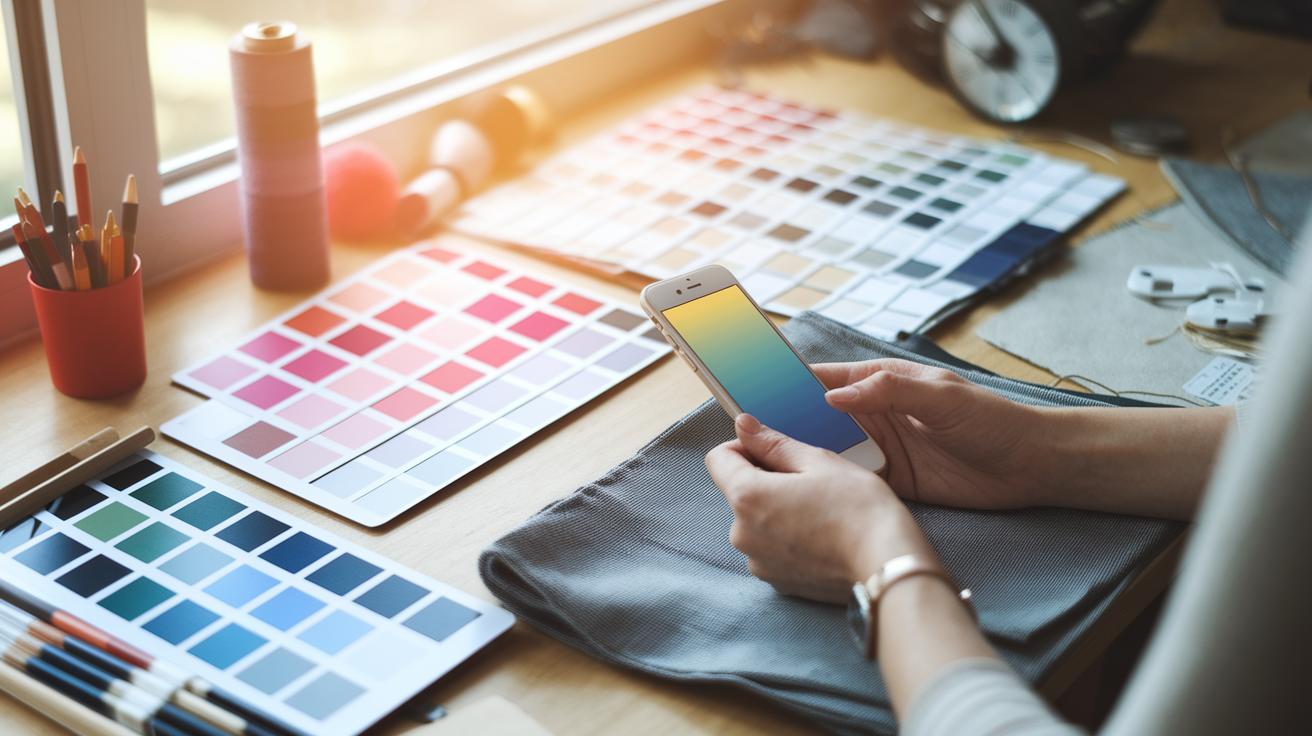
At-home fabric tests are a low-cost way to see how well your clothes might hold up. But they do have some limits. Without a lab's steady conditions, factors like sunlight, heat, and humidity change all the time. Simple home tools can make test results vary, so while these methods work for quick checks, they won't be as precise as professional tests.
Here are some common DIY tests:
- Colorfastness: Place the fabric in natural sunlight or use a smartphone color app to spot any fading.
- Wash Fastness: Run the fabric in your washing machine at 40°C with your regular detergent to check durability.
- Crocking: Rub a white cloth on the fabric with moderate hand pressure to see if any color transfers.
- Perspiration: Apply a homemade solution of lemon juice (acts as an acid) or baking soda (acts as a base) to test how the fabric reacts.
These simple methods give you a rough idea of performance, but lots of small factors, like different light conditions or washing cycles, can affect the outcome. To get better results, try to keep everything as consistent as possible, run the tests several times, and follow the same steps each time. For more tips on making these tests more reliable, check out how to test clothing durability at home.
Equipment and Standards for Comparing Lab vs Home Clothing Test Methods
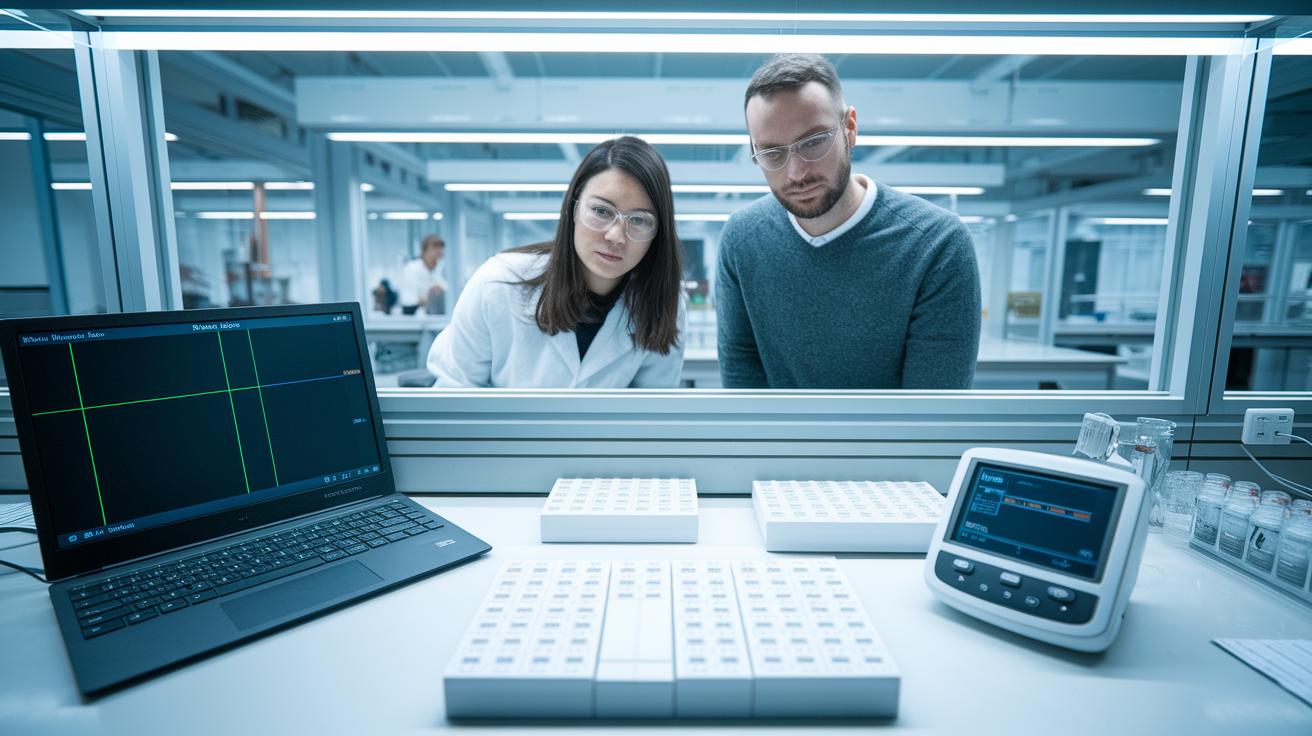
In professional labs, devices connect to a Laboratory Information Management System (LIMS, which tracks lab data) to log every measurement so everything can be traced. They use standard white samples and reference tiles to set a reliable baseline. Tools like handheld spectrophotometers and smartphone colorimeters get checked regularly with the standards provided by the manufacturer. This strict calibration routine helps cut down on errors and keeps tests consistent.
At-home testing tools, on the other hand, do not go through formal calibration. They lack regular check-ups and can change over time because sensor performance and the surrounding conditions vary. So, while DIY fabric tests are handy, the results may differ from one test to another, making them harder to compare with lab results.
• Use a reference sample made from standard tiles or white samples.
• Calibrate your device against that sample following the maker's instructions.
• Check the results by repeating tests in a controlled environment.
Cost-Benefit Comparison of Lab Versus Home Clothing Test Methods

When you need to check how well clothing holds its color and stands up to wear, you have two main options: lab tests or doing it at home. Lab tests usually run between $200 and $500 a sample. This cost covers detailed, certified testing that you might need if you have strict standards. Home kits, on the other hand, cost about $25 to $100 and give you a quicker, simpler check.
- Cost: Lab tests are more expensive, while DIY kits save money.
- Turnaround Time: Home kits give faster results but may not cover every detail.
- Data Quality: Lab tests offer solid, reliable results; home methods can vary.
- Compliance: Labs provide certified reports that meet regulatory rules, which home tests do not.
In short, if you need detailed, certified data, lab tests might be the right choice. However, if you're after a quick and cost-effective check, home testing kits can do the job. Choose based on what you value more: complete accuracy or fast, budget-friendly insights.
Case Studies in Comparing Lab vs Home Clothing Test Methods
Professional Laboratory Validation
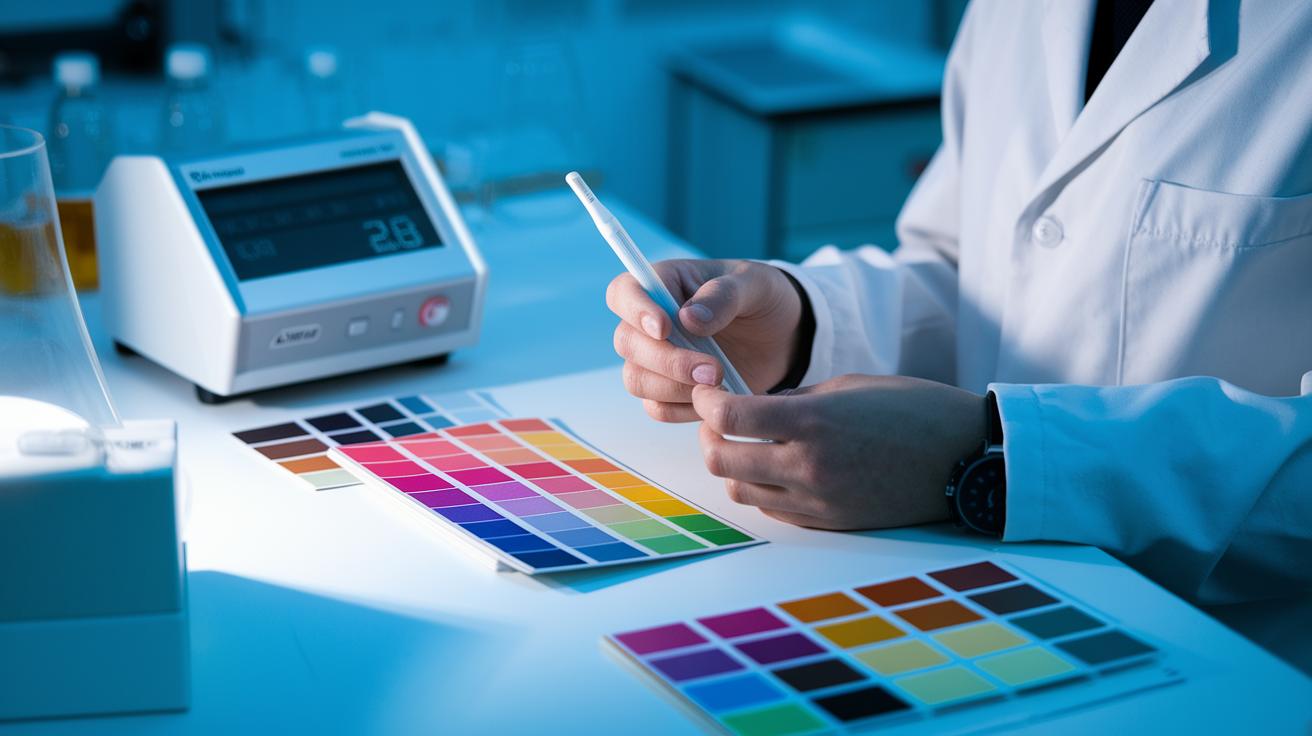
A trusted third-party lab tested a cotton blend fabric using a xenon arc tester (a machine that mimics sunlight) in a room with carefully controlled temperature and humidity. After 72 hours under xenon light, the color difference (called ΔE) was only about ±1.2, which means there was very little change. They used a spectrophotometer (an instrument that measures color details) to get very accurate and repeatable results. This shows that professional lab tests deliver reliable and consistent measurements.
DIY Home Testing Trial
We also tried a DIY test at home using a smartphone colorimeter. This tool, combined with AI-powered high-resolution imaging, picked up early signs of micro-fading with a higher variation of about ±4.0. However, home testing can be affected by changing ambient light and manual errors. Because the setup is not as controlled as a lab, the results can fluctuate, making this method better for quick checks rather than serious analysis.
Both methods reveal clear differences in accuracy. Laboratory tests offer better precision and consistency, which is ideal for strict quality control. Home testing gives useful early insights but is more variable, so it works best if you need a fast check rather than a definite answer.
Choosing Between Lab vs Home Clothing Test Methods for Fabric Longevity
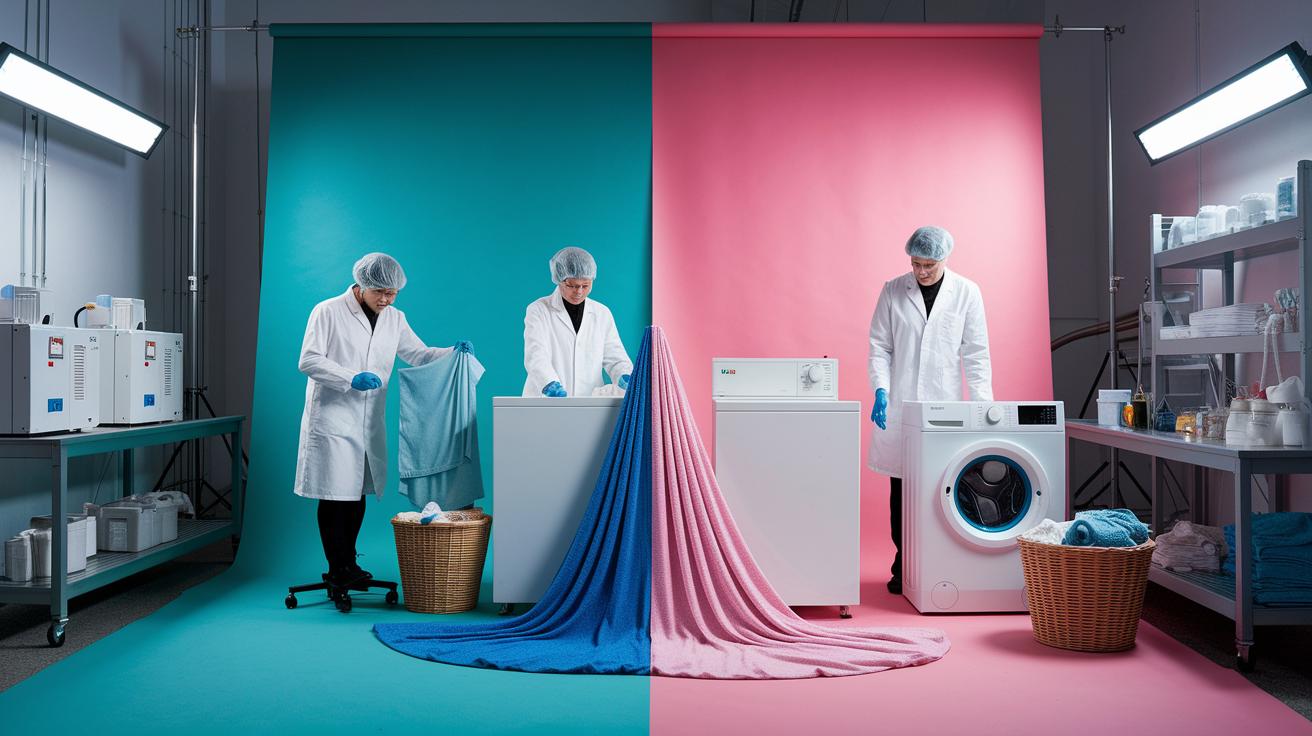
When you are choosing between lab testing or home testing for fabric durability, think about what matters most for your project. Consider how precise the data needs to be, how many samples you have, your budget, any compliance rules you must meet, and how quickly you need results. Compare these needs with your goals for garment quality and lasting wear.
Lab tests are done in a controlled setting (about 20 to 25°C and 50 to 70% humidity) and use accelerated aging (up to 1,000 hours of UV light and heat). This approach gives you steady and detailed data. In contrast, home tests use natural sunlight and repeated wash cycles to simulate wear. They provide quick and budget-friendly insights, though they may not be as precise.
- Test precision: Lab tests give you exact numbers, while home tests only offer rough estimates.
- Sample size: Lab setups work well with fewer samples.
- Budget: Home testing is easier on your wallet.
- Compliance: Lab reports often meet strict industry rules.
- Speed: Home testing gives you answers faster, though you lose some detail.
All these points tie into our broader look at durability. If your project requires precise, compliant, and detailed data, lab tests are the way to go. But if you need a fast, cost-effective check and can manage with less control, home testing is a solid choice.
Final Words
In the action, we explored both professional lab and DIY home approaches. The post broke down objective instrument use, environmental control, and budget versus accuracy trade-offs.
We compared factors like instrument precision, sample consistency, and repeatability. Each section offered clear examples of testing procedures, cost benefits, and real-life case studies.
Everyone can benefit from comparing lab vs home clothing test methods. The insights here help make smarter choices that lower return risk and boost confidence in your buys.
FAQ
Q: What are colour fastness test standards, color fastness test, and colour fastness test of fabric?
A: The phrase refers to standard methods that assess fabric resistance to color change. These tests use controlled lab conditions and precise measurements after exposures like washing, light, and chemical treatments.
Q: What are the methods for evaluating color fastness to washing and water?
A: The methods for testing color fastness in washing and water involve exposing fabric samples to controlled detergent cycles and water immersion, then measuring any color changes with instruments.
Q: What is a perspiration test in textiles and what does a colour fastness to perspiration PDF provide?
A: A perspiration test in textiles simulates human sweat using controlled acidic or alkaline solutions to check fabric color changes. Documentation, like a PDF, provides detailed testing procedures and results.
Q: What is a colour fastness test machine?
A: A colour fastness test machine is a device designed to expose fabrics to conditions such as washing, light, and perspiration, measuring how well the material retains its color under industry standards.
Q: How accurate are at-home drug tests and home testing kits compared to lab tests?
A: At-home drug tests and testing kits often show lower precision than lab tests because they rely on visual interpretation and variable conditions, offering quick preliminary results rather than definitive conclusions.
Q: Which is the most accurate test for diagnosing active COVID-19 infection?
A: The most accurate test for diagnosing active COVID-19 infection is the PCR test, which is processed in controlled lab conditions and has higher sensitivity and specificity than rapid at-home tests.
Q: What are the three types of lab testing?
A: The three types of lab testing typically include qualitative tests to detect presence, quantitative tests to measure amounts, and confirmatory tests to verify initial findings with high accuracy.