

Ever wonder why your shoes sometimes feel off? They might be too tight or too loose. The right fit can make your day feel much better, and it all starts with knowing your foot's true width.
This guide shows you a simple chart with narrow, regular, and wide sizes in both inches and centimeters. We explain each option clearly so you can pick the most comfortable style. Plus, our easy home measurement steps help you stop guessing and start enjoying shoes that truly fit.
Complete Foot Width Size Chart for Shoe Width Categories
This chart shows U.S. shoe sizes with three key foot width numbers. The columns list Narrow (B), Regular (D), and Wide (2E) measurements in both inches and centimeters. Measure the widest part of your foot and use these numbers to find your best match. If your foot measurement is close to the Regular number but you sit between sizes, consider a wider option for extra comfort.
| Shoe Size (US) | Narrow (in/cm) | Regular (in/cm) | Wide (in/cm) |
|---|---|---|---|
| 5 | 3.10 in / 7.87 cm | 3.35 in / 8.51 cm | 3.65 in / 9.29 cm |
| 6 | 3.20 in / 8.13 cm | 3.45 in / 8.78 cm | 3.75 in / 9.53 cm |
| 7 | 3.30 in / 8.38 cm | 3.55 in / 9.02 cm | 3.85 in / 9.78 cm |
| 8 | 3.40 in / 8.64 cm | 3.65 in / 9.27 cm | 3.95 in / 10.03 cm |
| 9 | 3.50 in / 8.89 cm | 3.75 in / 9.53 cm | 4.05 in / 10.29 cm |
| 10 | 3.60 in / 9.14 cm | 3.85 in / 9.78 cm | 4.15 in / 10.56 cm |
| 11 | 3.70 in / 9.40 cm | 3.95 in / 10.03 cm | 4.25 in / 10.80 cm |
| 12 | 3.80 in / 9.65 cm | 4.05 in / 10.29 cm | 4.35 in / 11.05 cm |
If your measurement falls between categories, choose the wider option for a more comfortable fit.
Step-by-Step Guide to Measuring Foot Breadth at Home
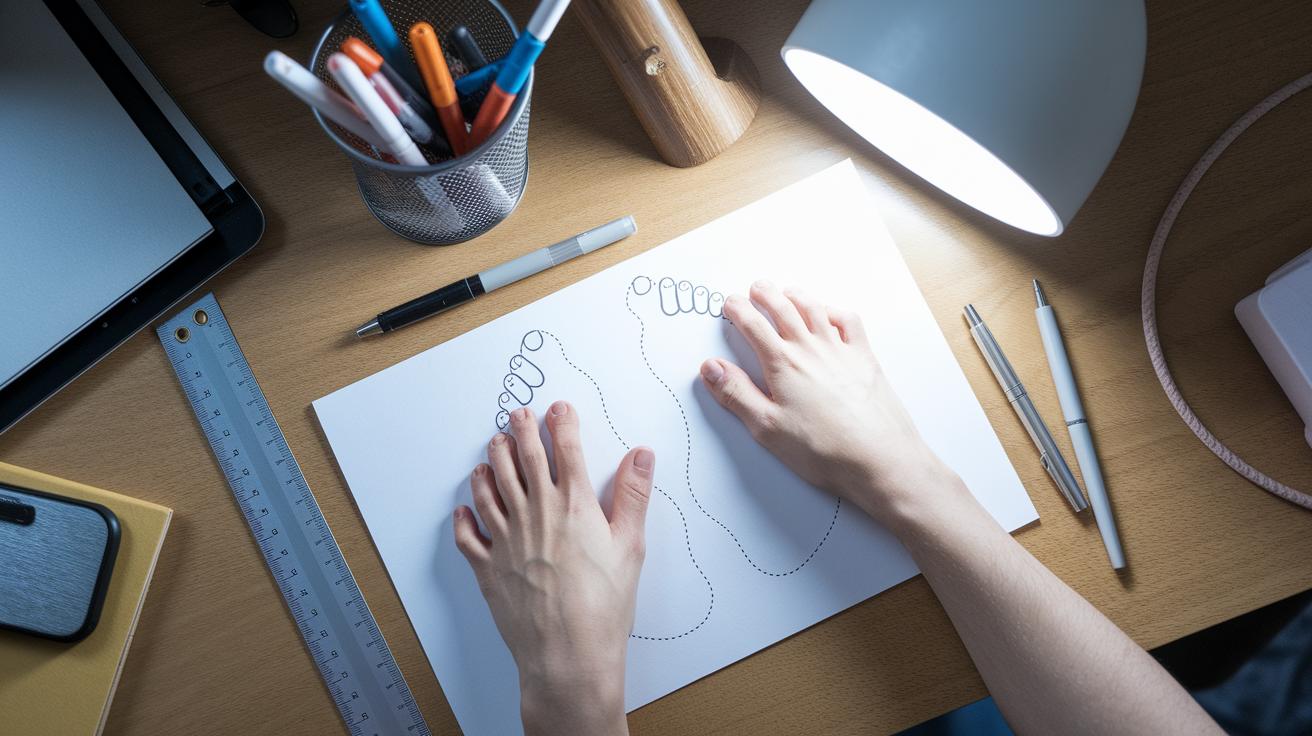
Tools You Need
You only need a few simple items:
- A ruler or soft measuring tape
- A piece of paper
- A pen
- A flat, hard surface
How to Trace Your Foot
At the end of the day, when your feet are at their fullest, place one foot on the paper. Stand up straight with your heel touching the paper so your foot stays in its natural shape. Use the pen to slowly trace around your foot without lifting it. Think of it like outlining a leaf, capturing every curve clearly.
How to Measure the Width
Look at your traced foot and find the widest part at the ball of your foot. Lay the measuring tape or ruler horizontally over this spot. Hold it gently so it doesn’t press into the paper and change the outline. Write down the measurement in inches or centimeters. It’s similar to measuring the diameter of a circle where every bit matters.
How to Find Your Shoe Width
Take your measurement and compare it to a foot width size chart. Match your number to the letters that show narrow, regular, or wide. Make sure to measure both feet and use the larger number for the best fit. If your measurement sits between two sizes, pick the wider one so your shoes feel more comfortable.
Comparing Foot Length Versus Breadth for Optimal Fit
When picking your shoes, it's key to check both the foot length and the foot width. Foot length is the measure from your heel to your longest toe. Foot width is how wide your foot is at its broadest part. Some shoe brands adjust the width according to the length, but many stick with one fixed shape. That means even if the length fits perfectly, you might need a different width.
Here are a few simple tips to remember:
- Length-to-width ratio and weight distribution: Think of someone who shares their weight evenly. Their shoes need to support both parts well.
- Arch height impact on breadth fit: A high arch can lead to less natural width at the ball of your foot.
- Shoe last shape versus natural foot shape: Some shoes are made to mirror the curves of your feet, while others are more standard.
- Importance of girth measurement for snugness: Measuring around your foot can give extra insight for a secure fit.
- When to size up the width even if the length fits: If you feel slight tightness around the ball of your foot, a wider shoe might work better.
Knowing these differences can help you avoid discomfort and get a shoe that feels just right.
foot width size chart: Sleek Shoe Fit

When shopping for shoes, it helps to know that the way widths are measured can change from one region to another. In the U.S., you’ll see letters like B, D, or 2E to show width. Over in the U.K., the pattern might be noted as C or E. In many European charts, they skip the letters and just give you the actual measurement. For instance, a U.S. size 7 could feel a bit different in the U.K. or Europe because of this.
Many top brands, like Nike, Adidas, and New Balance, have their own unique sizing systems. They might label widths in a way that is special to them or even include extra details, like mid-sole measurements in millimeters (which tell you how thick the sole is). Keeping an eye on these differences will help you pick shoes that feel just right on your feet.
foot width size chart: Sleek Shoe Fit
Getting the right shoe is a must for happy, comfy feet. When shoes are made to fit your exact foot width, you get less pinching and more ease all day long. Look for shoes that offer flexible fabrics, roomy toe boxes, and easy-to-adjust closures. We break down three common types to help you choose the best fit.
Sneakers (for medium to wide feet)
Most sneakers use a soft, stretchable mesh that hugs your foot without feeling tight. They move smoothly with you whether you’re walking or running. This flexible design works well if your feet are regular or a bit wider.
Dress Shoes and Heels (with a spacious toe area)
For dress shoes and heels, a roomy toe box is key. They should let your toes spread out without crowding, so you don’t feel squeezed. This careful balance keeps you looking sharp and feeling comfortable through long days.
Sandals and Boots (with adjustable features)
Sandals and boots often come with adjustable straps or multiple width options. This lets you fine-tune the fit if your measurements fall between standard sizes. A secure, customizable closure can make all the difference in comfort.
Match your shoe style to your measured width and take every step with confidence.
Troubleshooting Common Foot Measurement Errors
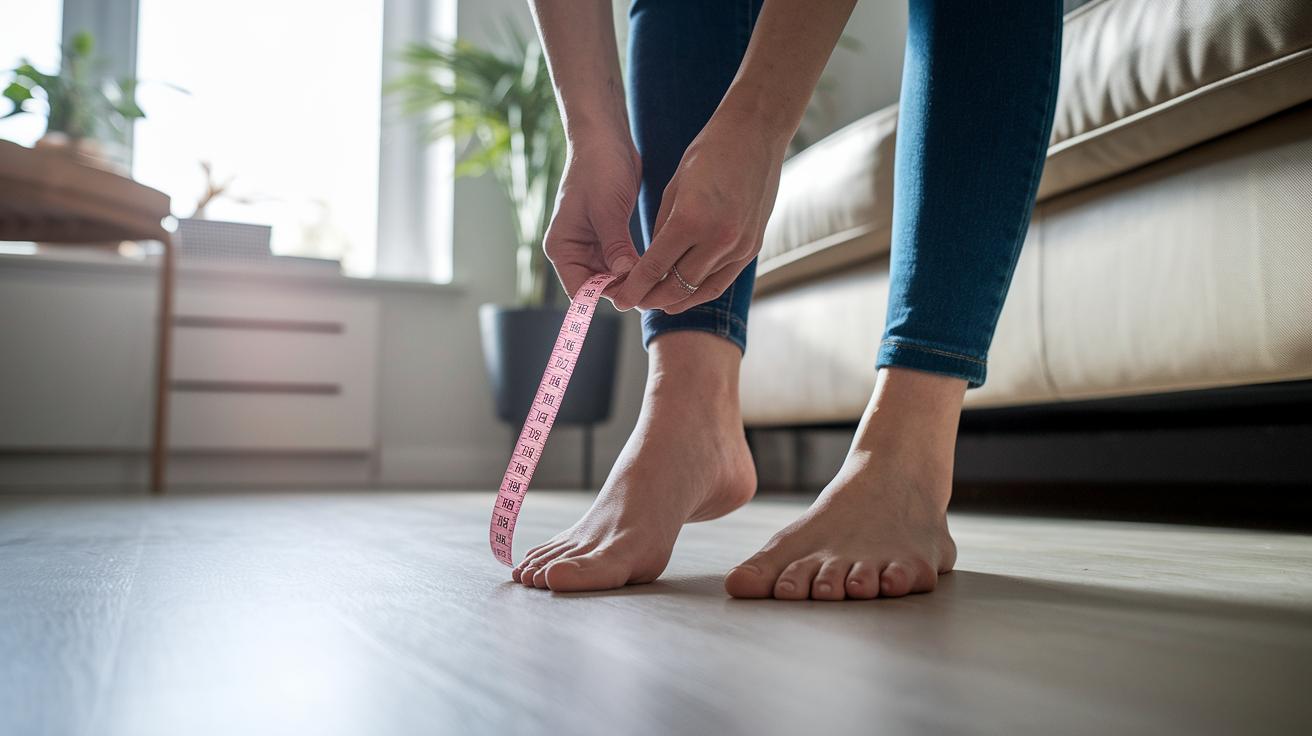
People often measure the wrong spot by using the arch instead of the ball of the foot. Measuring early in the morning or only measuring one foot can make your foot look thinner than it is. Tightening the tape too much can also squeeze soft tissue and throw off your measurements.
For the best results, measure at the end of the day when your feet are at their fullest. Use a soft tape or a ruler gently. For example, put your foot on a flat surface and use a soft tape to lightly capture the full width at the ball. Remember to measure both feet and note the larger number.
Follow these simple steps: use a flat surface, place your tape snugly at the widest point without pressing hard, and measure both feet. This routine will help you get the right foot dimensions and find shoes that truly fit. For more tips on choosing comfortable shoes, visit the supportive and comfortable shoes link (https://jankreviews.com?p=1615).
Advanced Digital Tools and Tips for Precise Foot Width Assessment
Digital tools are now a big help when measuring your feet. Smartphone apps use your camera to make a quick 3D scan of your foot. This gives you an exact map of its width that feels almost like a digital footprint. Online calculators work too; you simply enter numbers like breadth, girth (the round measurement around your foot), and arch (the curved part in the middle) to get a detailed profile.
These tools cut out the guesswork and make it easier to find the right shoe size. Accurate dimensions mean the shoe recommendations match your actual foot shape, so you end up with better fitting shoes right away. This saves you from the hassle of returns or having to adjust your footwear later.
Some stores even have high-tech scanners that use smart computer tools to suggest the best fit. If you use one of these digital methods, it helps to check the numbers with a simple soft tape measure at home. That little extra step makes sure your foot size is spot-on before you buy.
Final Words
In the action, we broke down the process of measuring your foot accurately, provided a clear foot width size chart, and explained how to pick shoes that match your unique measurements. Our guide covered easy home measurement steps, common pitfalls, and even digital tools for a precise fit.
With practical tips on comparing foot length and breadth, as well as international variations, you'll be armed with real, actionable advice to reduce returns and shop with confidence. Happy measuring and finding your perfect pair!
FAQ
What is a foot width size chart?
A foot width size chart converts your foot measurement in inches or centimeters into standard width labels like Narrow (B), Regular (D), or Wide (2E), helping both men’s and women’s shoes fit properly.
What is a foot width calculator?
A foot width calculator uses your measured foot breadth to determine your shoe width by matching your number to a standard width label, ensuring you find a better fitting shoe.
How do I know my foot width size?
Knowing your foot width size means measuring the widest part of your foot (near the ball) and comparing that measurement to a standard chart, so you choose shoes that fit your natural shape.
What does a shoe width chart D indicate?
A shoe width chart using D signifies a regular, average foot width, which is a standard baseline when comparing to other labels like Narrow (B) or Wide (2E).
What is wider, D or EE (2E)?
The label EE, also known as 2E, is wider than D, meaning it offers a roomier fit for those with broader feet compared to the regular D measurement.
Is D the same as 2E?
D and 2E are not the same; D is the standard regular width, while 2E (or EE) is a wider dimension designed to accommodate a broader foot.
How wide is a 2E foot?
A 2E foot has a breadth that is noticeably larger than the standard D width, providing extra room in the midfoot area to enhance comfort for people with broader measurements.