

Quick verdict: Learn to spot accessories that can stand up to everyday wear.
Ever wonder if your favorite accessory will hold up over time or fall apart after just a few uses? In this post, we show you how to check an item’s durability and how easy it is to fix. We explain why long warranties and repair ratings matter and how simple design choices and spare parts can make a big difference. Follow our tips to find pieces built to last, so your style investment stays smart day after day.
Core Principles of Accessory Longevity and Maintenance Quality
Good accessories save you money and time. When an accessory carries a long warranty, it shows the maker trusts their design. It means the item is built tough and ready for daily wear. Keeping it in top shape over time is just as important.
Every check matters. Looking at repair scores and certifications can tell you if an item is easy to fix. Having spare parts and repair manuals handy means a quick fix is possible when something goes wrong. Features like standard fasteners let you swap out small parts easily. And when an accessory is made with high-grade materials and a timeless style, it can stand up to changing trends.
• Look for long warranty periods as a sign of manufacturer confidence.
• Check repair scores and handy certifications to see how easy future fixes will be.
• Make sure spare parts and repair manuals are available if you need them.
• Choose items with a modular design and standard fasteners for simple swaps.
• Evaluate the material and design to ensure it stays stylish over the years.
By keeping these points in mind, you can pick accessories that keep their look and performance for a long time. When every criterion scores well, you know the quality has been thoroughly checked. This way, you invest in pieces that boost your style and stick with you through everyday life.
Durability Testing Methods for Assessing Accessory Resilience

We run lab tests to see how well an accessory holds up over time. These tests mimic everyday wear so you know what to expect when you use it daily.
For example, we check scratch-resistance by gently scraping gold to see if it stays smooth (scratch-resistance means how well the metal fights off small marks). Platinum is put through an oxidation test by exposing it to extra humidity and pollutants, which speeds up aging. Silver undergoes a tarnish test in a sulfur-rich setting to see how quickly it might change color.
We also test moving parts like clasps and hinges. By opening and closing them repeatedly, we spot weak spots that might fail over time. This approach gives a clear picture of how practical an accessory is for regular use.
Evaluating Wear and Tear in Accessories Through Inspection
Start by looking closely at your accessories. Check for dirt, oil, or makeup marks. For example, you might see a small patch of dullness on your favorite bracelet that hints it needs a good cleaning.
Next, run your fingers over the piece. Feel for scratches, dents, or rough spots that you might have missed at first glance. Touch the metal to see if it feels weak or if you detect any buildup. This step can help you spot issues like loose prongs in gemstone settings that need attention.
Follow these simple steps for a thorough check:
- Look over the whole accessory for any marks or color changes.
- Gently slide your finger along the surface to notice any texture differences.
- Inspect details such as chain links, clasps, and hinges for any bends or kinks.
- Focus on parts that meet water, like pieces exposed to chlorine or saltwater, since even slight discoloration there can mean the metal is weakening.
Plan to do these inspections every few months to catch problems early.
Scheduling Preventive Maintenance and Inspection Intervals

Start your maintenance plan at home by cleaning your accessories once a month. Wipe away oil, dirt, and residues to keep them looking fresh. For items used every day, a gentle weekly wipe can help keep them in top shape and prevent build-up that may lead to early wear.
Every three months, do a close visual check of each piece. Look for surface marks, scratches, or early signs of wear. Run your fingers over hinges, clasps, and settings to feel for any rough spots. Check for discoloration, loose parts, or small dents that could grow into bigger issues.
Once a year, get a professional check-up. A specialist can spot hidden issues, like worn prongs or weak joints, that you might miss on your own. This extra step helps your accessories stay in good condition for the long run.
Finally, adjust these intervals based on how much you use your items and the environment they are in. Accessories that see heavy use or are exposed to high humidity or strong sun might need more frequent care. Use these tips to create a maintenance plan that fits your everyday needs.
Comparing Maintenance Requirements Across Accessory Materials
Accessories come in different materials and each needs its own care to stay looking good over time. Knowing how to treat gold, platinum, silver, leather, and fabric keeps them in shape longer. With the right routine, you avoid issues and keep your pieces looking fresh.
| Material Type | Common Wear Issues | Recommended Maintenance |
|---|---|---|
| Gold | Fine scratches and surface marks | Wipe gently with a soft polishing cloth |
| Platinum | Oxidation over time | Use non-abrasive cleaning agents |
| Silver | Tarnish and discoloration | Apply silver-specific polish frequently |
| Leather | Moisture absorption and stains | Regular conditioning and water-repellent sprays |
| Fabric | Spills and UV damage | Spot-clean promptly and use protective sprays |
When choosing a care routine, think about the strengths and weaknesses of each material. Gold is soft and can scratch easily, so it needs a gentle wipe with a soft cloth. Platinum is tougher but can oxidize, meaning mild cleaners work best. For silver, regular polishing stops tarnish, while leather benefits from a bit of conditioning to fight stains and moisture problems. Fabric pieces are prone to spills and sun damage, so quick spot-cleaning and protective sprays are a must. Matching your care routine to the material helps your accessories last for years.
Best Practices and Tips for Extending Accessory Lifespan
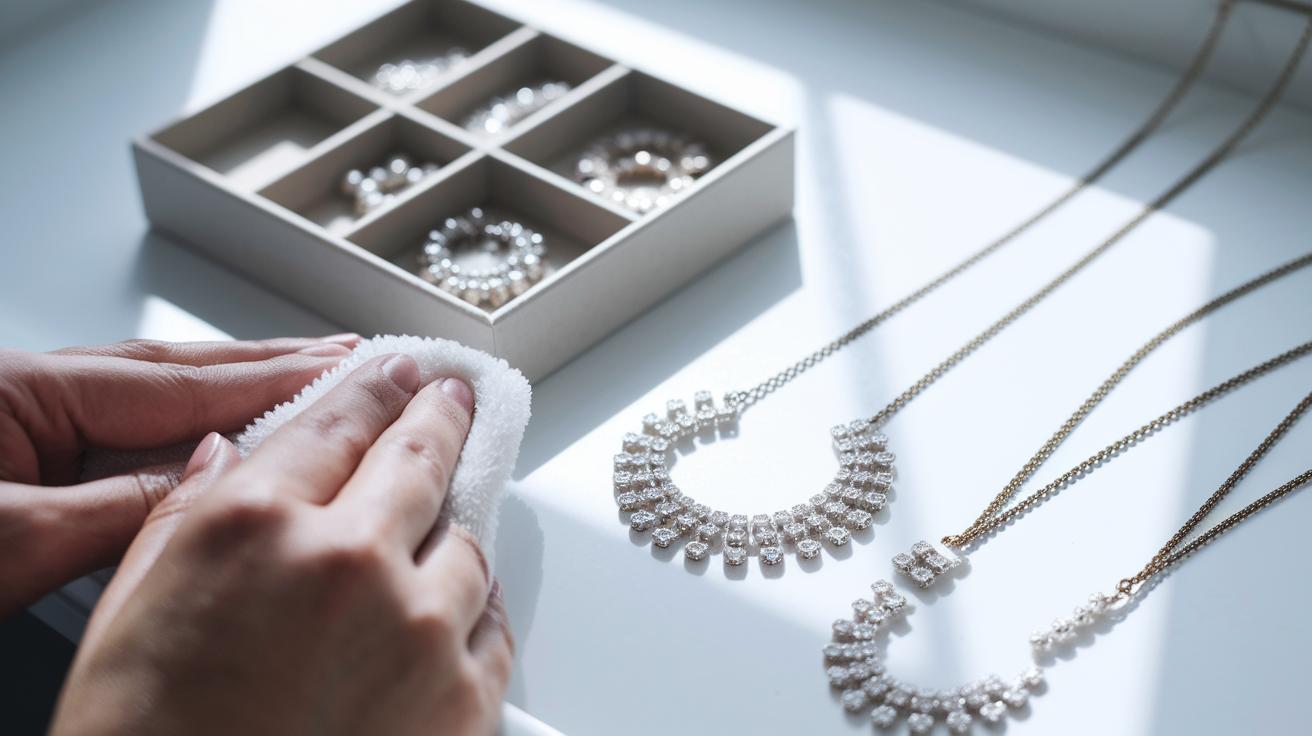
Keep your accessories looking great with a quick daily cleaning. A soft cloth wipes away oil, dirt, and pollutants, so your pieces stay fresh for everyday wear. Store your rings and earrings in a small divided box and hang your necklaces on an organizer. This simple routine helps keep both their shine and shape, so they don't wear out too fast.
Be smart about when you wear your accessories. Remove them before exercise, doing household chores, or swimming in chlorinated water. Water, harsh chemicals, and extreme temperatures can weaken metal and ruin delicate finishes. A little extra care before these activities can prevent scratches and discoloration that might not be fixed later.
It also helps to have a pro check your items from time to time. Regular inspections can catch small issues that cleaning might miss. Keeping insurance and proper documentation covers you when unexpected damage happens, protecting your investment. For more ideas on keeping your accessories in top shape, see how quality accessories enhance outfit performance.
Final Words
In the action, this post walked through key care steps, from testing durability to a hands-on inspection of wear and tear. It mapped out daily cleaning, scheduled check-ups, and smart comparisons of maintenance needs for different materials. We covered advice on linking repair ease and warranty confidence to practical upkeep scheduling.
This guide helps you decide wisely when shopping by showing how to assess accessory longevity and maintenance quality. Fresh, clear tips empower confident, lasting choices for a well-cared-for wardrobe.
FAQ
How to assess accessory longevity and maintenance quality?
Assessing accessory longevity means you check for long warranty periods, repair scores, spare parts availability, and modular design features, which signal both manufacturer confidence and ease of future fixes.
What maintenance practices should you adopt to prolong measuring tools’ effectiveness and lifespan?
Prolonging tool effectiveness involves regular cleaning, calibration, and inspections, along with prompt repairs and proper storage, all of which help maintain accuracy and safe operation.
Why is routine check-up and maintenance of tools and equipment important?
Routine check-ups catch early signs of wear and small damage, ensuring tools remain effective and safe, and they help extend overall lifespan by preventing bigger issues before they arise.