

Quick Verdict
A good belt can really pull your look together.
Why We’re Talking About Belts
Ever wonder if your belt is up to the task? A sturdy belt can upgrade your outfit in no time. We are here to share easy tips to help you figure out if a belt is built to last.
How to Check Your Belt
• Look at the material. Feel if it is smooth and strong.
• Check the stitching. Make sure the seams are neat and even.
• Test the hardware (the buckle and holes). See if they hold firm and show no loose parts.
Simple Tips for a Smarter Choice
These tips are simple enough for anyone. Take a minute to inspect your belt, and you might just find that perfect accessory to boost your style.
Comprehensive Quality Assessment Tips for Fashion Belts
Start by taking a step-by-step approach when examining a belt. A good belt usually uses high-grade leather, either full-grain or top-grain (which means you can see natural bumps and imperfections), paired with a brass buckle that promises long-lasting use. Run your fingers over the leather to check for a mix of softness and firmness, and pay attention to its natural pattern and even its earthy smell – these little signs point to quality material.
Look at the belt with purpose. Check that the stitching is neat and the edges do not show any loose threads. This shows that the belt was made with care. Also, make sure the belt fastens at the middle hole. You might need a belt that is one or two sizes bigger than your usual pant size. Belt width matters too. Thinner belts around 1 inch work best for formal settings, while wider belts, about 1.5 inches, are great for casual daily wear. This simple process turns what might seem like just a small accessory into a key piece of your outfit.
Here are six simple checks you can use:
- Material quality: Feel the leather to see its texture and natural marks.
- Sensory check: Notice the leather’s smell; it should have a rich, earthy scent and feel balanced between soft and firm.
- Stitching and finish: Look for even stitching and smooth edges free of fraying.
- Sizing: The belt should fasten at the middle hole, usually meaning you need a size or two larger than your pant waist.
- Width and style: Match the belt width to your outfit – about 1 inch for dressier looks and up to 1.5 inches for casual wear.
- Buckle and hardware: Ensure the brass buckle works smoothly without any rough spots.
Using these clear and simple checks, you can confidently sort out belts that are well-made and ready to add a polished touch to your style.
Material Quality Evaluation for Fashion Belts
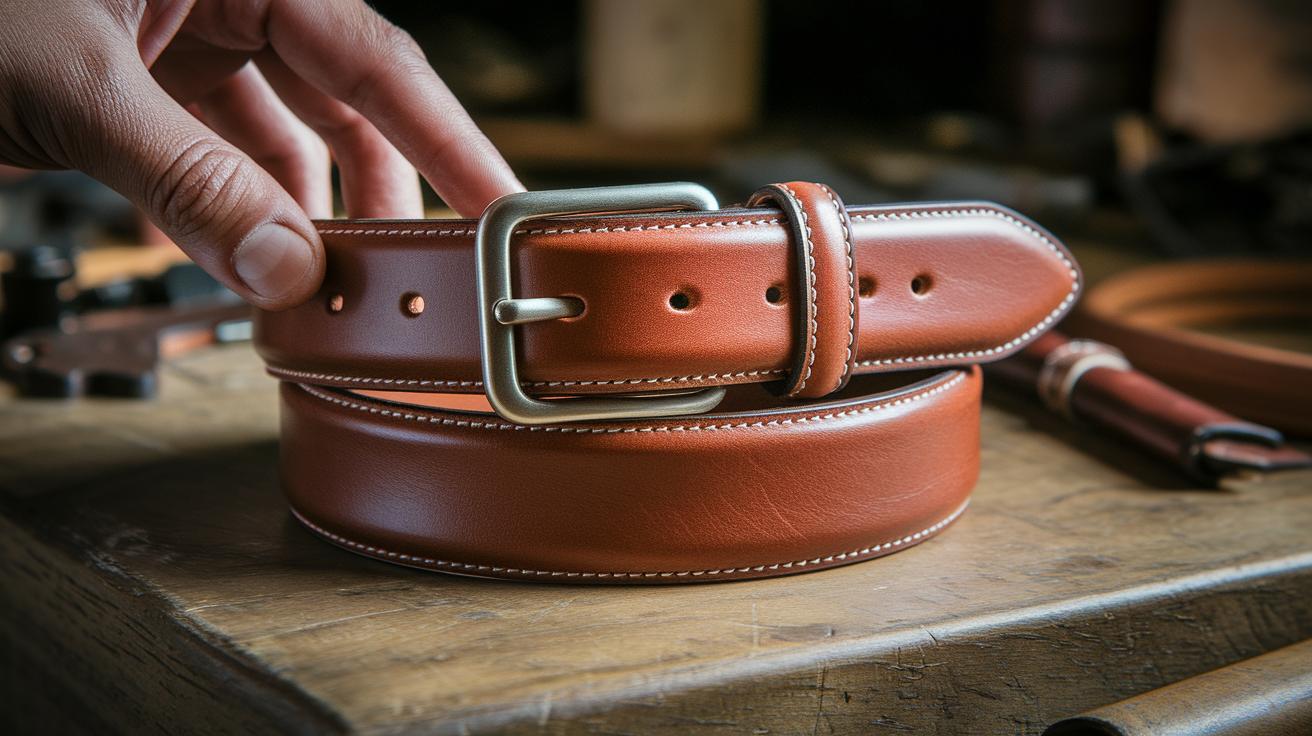
When you're checking out a new belt, it's smart to understand the leather quality. Full-grain leather keeps its natural markings and softens over time, giving a unique look as it ages. Top-grain leather is smooth and hides most flaws, so it looks very even, although it might not develop as rich a patina. Run your fingers over the belt, check the edges, and even give it a light sniff to see if it has that rich, earthy smell, these little tests help ensure you pick a belt that will last.
Knowing the difference between leather types can really help you decide. Genuine leather comes from leftover pieces and doesn't last as long, while bonded leather is made from scraps glued together with chemicals and tends to break down faster.
| Leather Type | Durability | Key Characteristics |
|---|---|---|
| Full-Grain | High | Natural texture, forms patina |
| Top-Grain | Moderate to High | Smooth, uniform appearance |
| Genuine | Low to Moderate | Lower-grade remnants, wears faster |
| Bonded | Low | Scraps bound with chemicals |
For belts made with synthetic materials, check that they have an even texture and secure edges. Materials like PU or PVC are made to feel like real leather, resist tears, and come at a friendlier price.
Craftsmanship and Hardware Inspection Techniques
Start by taking a close look at the belt's build. A few details, like the stitching and metal parts, can tell you if the belt is made to last.
Evaluating Stitching and Edge Finishing
Check the seams carefully. The stitches should be straight and tight with no loose ends. The thread must hold the leather layers securely. Look at the edges too. They should be smooth with no raw sides. When the edges are painted or burnished well, you know extra care went into making the belt durable for day-to-day wear.
Buckle and Hardware Integrity Checks
Now, focus on the buckle and other metal parts. The buckle, usually brass, should feel solid, without any rough spots. Run your finger along it to make sure the moving parts work smoothly. Check the metal finish; it should look even and resist scratches. These simple checks confirm that the buckle and rivets are well attached and ready for daily use.
- Press and flex the leather near the stitches to see if the thread holds strong.
- Slide the buckle prong through the holes and feel for smooth movement.
- Inspect the back of the buckle for any sharp or uneven edges.
- Rub the hardware gently with a cloth to make sure the finish stays on.
- Test the rivets or snaps to see if they are securely in place.
Evaluating Design and Functional Features of Fashion Belts
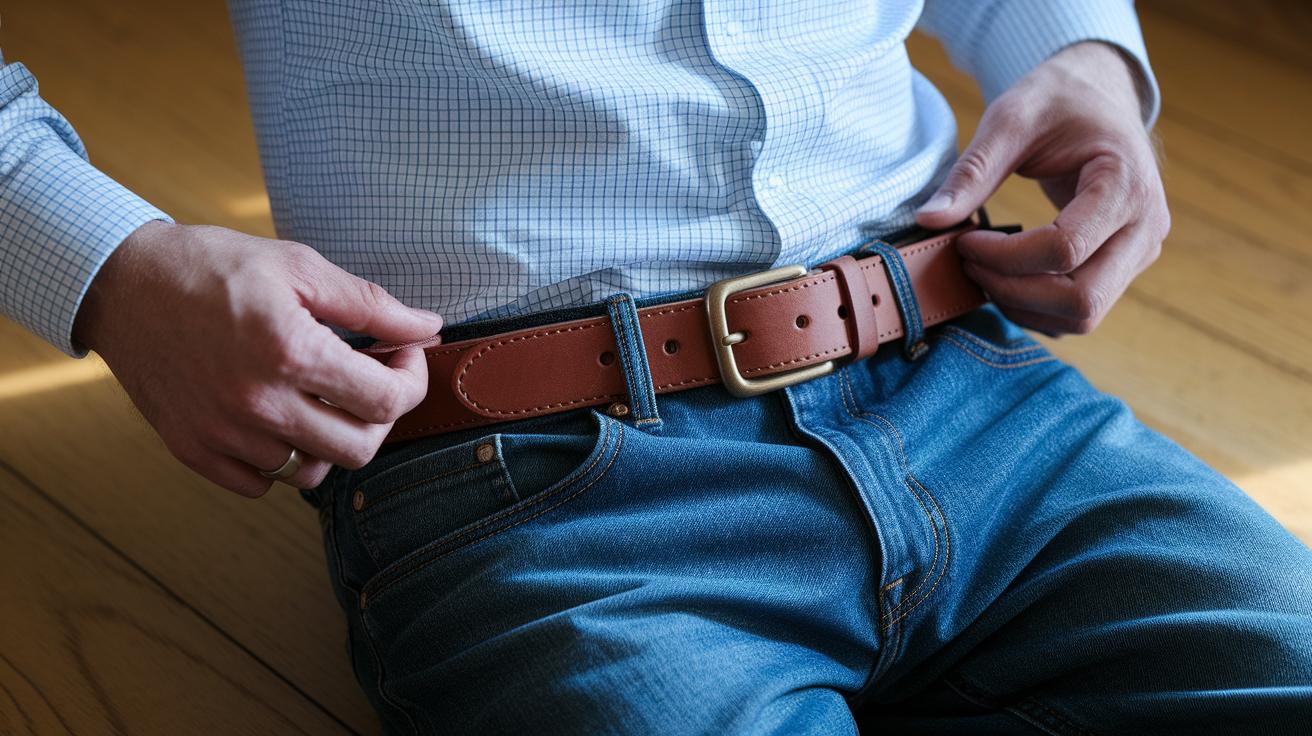
A belt is not just a tool to keep your pants up. It also sets the overall vibe of your outfit. When you try one on, check both how well it works and how stylish it is. Formal belts are usually between 1 and 1.25 inches wide for a neat look. Casual belts can be wider, around 1.5 inches, giving off a laid-back feel. Also, a good belt has plenty of holes for adjustability. Most well-made belts come with 5 to 7 holes, each about an inch apart. Look at details like the texture, stitching, and buckle, which help complete your style.
- Proper width for flexibility
- 5 to 7 holes spaced about one inch apart
- Design that fits your wardrobe style (formal or casual)
- Extra details such as contrast stitching or embossed logos
For color, classic shades like black or brown are a safe bet. They match easily with most shoes and clothes. This simple choice not only pulls your outfit together but also adds a touch of elegance.
Durability Testing and Longevity Insights for Fashion Belts
A good belt has to hold up during everyday wear. We put belts through simple tests to see just how tough they are. By checking how they handle rubbing, bending, and water, you get a clear picture of their endurance.
| Test Type | Method | Pass Criteria |
|---|---|---|
| Abrasion Test | Rubbing the leather on a rough surface | No obvious scratches or damage |
| Flex Test | Bending at the buckle area over and over | Material stays smooth without cracks |
| Water Resistance | Spraying a light mist on suede or treated leather | Water beads up or barely soaks in |
Belts crafted with ethical manufacturing and sustainable sourcing tend to last longer. When makers pay close attention to both strength and environmental impact, you end up with a belt that lasts and helps reduce waste.
A bit of proper care goes a long way. Try to avoid rough use and harsh surfaces. A gentle wipe with a damp cloth and occasional leather conditioning keeps the belt soft and less likely to crack. This easy routine helps maintain its clean look and strong performance for years to come.
Comparing Quality Across Different Fashion Belt Types
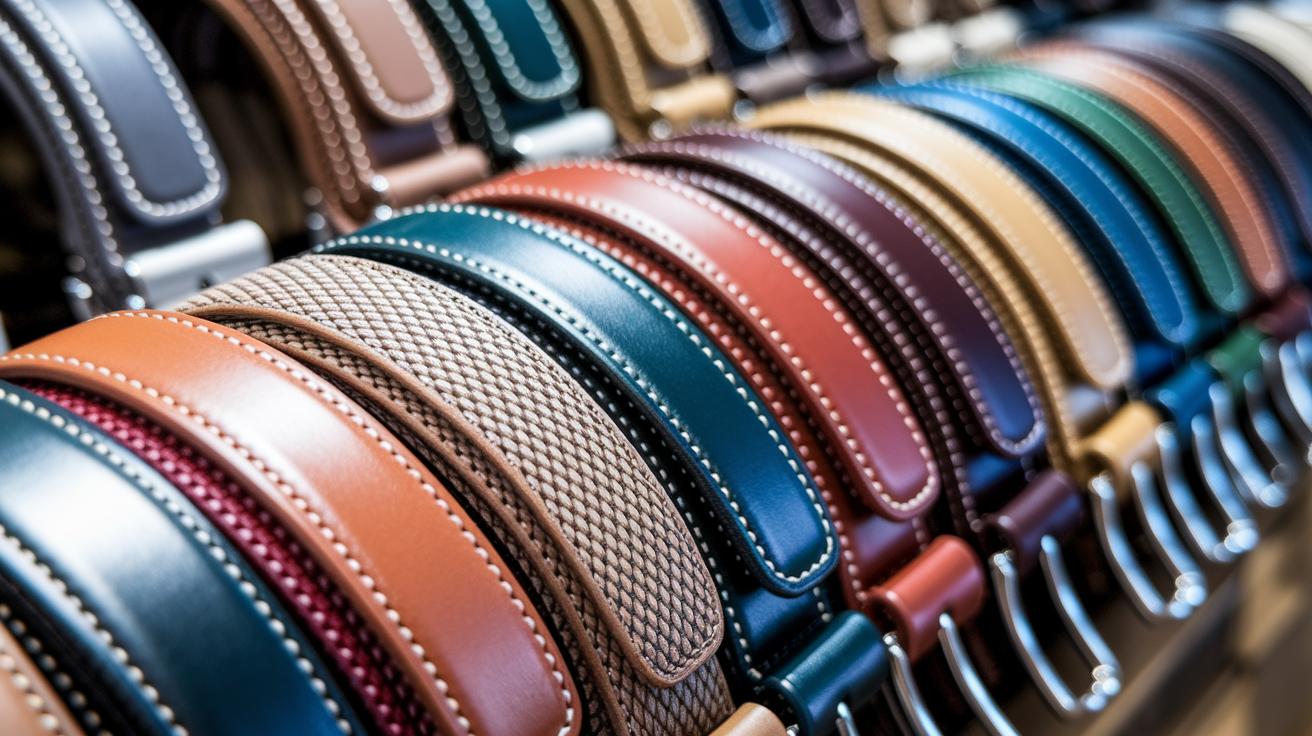
When shopping for belts, it's helpful to know what details to check to make sure you're getting quality. Each belt style is made differently and has its own key features. For example, a leather tab belt should show a clean cut and smooth edge. A fabric belt works best when the weave is tight and the binding is secure. Military buckle belts need strong webbing and a metal buckle that fits well. Grosgrain ribbon belts rely on a dense weave and neat stitching, while surcingle belts are built with sturdy leather ends and durable fabric straps.
- Leather Tab Belts: Look for a smooth cut and a refined edge finish.
- Fabric Belts: Check that the weave is tight and the binding is secure.
- Military Buckle Belts: Test for strong webbing and a well-fitting metal buckle.
- Grosgrain Ribbon Belts: Examine the ribbon's density and the accuracy of the stitching.
- Surcingle Belts: Verify that the leather ends are securely attached and the fabric is durable.
These checks help you pick the best belt for your needs. Leather tab belts work well for a clean, stylish look. Fabric belts are great for everyday, casual wear. Military buckle belts match a rugged, active style. Grosgrain ribbon belts add a unique texture when you want to make a statement. And surcingle belts bring both style and function together.
Final Words
In the action, we walked through everything from checking leather grades to inspecting hardware and design details. We broke down each step so you know what to look for, whether it’s the material quality or durability tests.
Armed with these quality assessment tips for fashion belts, you now have a solid guide to avoid sizing issues and make smart purchases. Enjoy building a wardrobe that fits well and stands the test of time!
FAQ
What do quality assessment tips for fashion belts (Reddit, women’s, and men’s) suggest?
Quality assessment tips for fashion belts suggest checking the leather type, stitching, natural grain, and buckle finish. They urge using sensory tests for softness, smell, and overall durability.
How can you tell if a belt is good quality or check its quality?
Telling if a belt is good quality involves inspecting the leather grain, seam work, and hardware. A solid belt feels sturdy, has neat edges, and features a well-secured buckle.
What is the rule of thumb for buying a belt?
The rule of thumb for buying a belt recommends selecting one or two sizes up from your waist, ensuring the buckle fastens at the central hole, and confirming that the material is durable.
What makes a high quality leather belt?
A high quality leather belt is made of full-grain or top-grain leather with genuine natural textures, neat stitching, and a robust brass buckle that performs smoothly.
What are some belt styles for men and how should they be worn?
Belt styles for men range from narrow, formal options to wider, casual belts. They should be worn so the buckle lands at the center hole, matching the belt width with the outfit for a balanced look.
What is a belt guide?
A belt guide is a resource outlining quality checks, material evaluations, and styling tips. It helps shoppers choose belts that combine function, durability, and fashion appeal.
What are LUDENS belts?
LUDENS belts refer to a brand known for quality construction and attention to detail. They typically feature premium leather, reliable hardware, and design elements that meet modern style demands.
What is the best belt color for jeans?
The best belt color for jeans is usually classic brown or black. These colors pair well with most denim shades and offer a versatile, timeless look.