

Ever wonder why new shoes sometimes feel off? The real issue might be that the size isn’t right.
This guide shows you how to measure your feet in simple steps and gives you conversion tips for US, UK, and EU sizes.
Follow these clear tips:
- Grab a piece of paper, a pencil, and measure your foot at your longest point.
- Use the handy conversion table to match your measurement to the right size for your region.
With these easy steps, you can say goodbye to guesswork and step into shoes that fit like they were made just for you.
Measure Your Feet Precisely for Accurate Shoe Sizing
Getting the right shoe size starts with knowing your foot measurements well. Here’s a simple guide to help you measure your foot length and width accurately:
-
Measure in the evening. Your feet tend to swell a bit during the day, so measuring them later, like in the early evening, helps you avoid shoes that feel too tight or too loose later on.
-
Trace your feet. Put a piece of paper on a hard floor and step on it firmly. Then, use a pen to carefully draw around your feet so you capture the true shape and size.
-
Record your numbers. With a ruler, note the length and width in millimeters. Always use the larger measurement between your two feet to decide the best shoe size for you.
-
Double-check your results. If something feels off, measure again. Making sure your numbers are consistent can help you pinpoint the perfect fit.
These at-home measuring tips give you a clear idea of your foot dimensions. Stick to your numbers for a shoe size that fits just right.
Compare Regional Standards with Shoe Sizing Conversion Charts

Getting the right shoe fit means knowing how US, UK, and EU sizes match up. We use a conversion tool that gathers data from over 40 brands. It links foot length in millimeters (mm, a measure of length) to US sizes, men's US-EU sizes, women's European sizes, sneaker sizes, and even kids' sizes. Our tests show that sizes can vary a lot from one brand to another. For example, a US size 9 shoe might have an internal length anywhere from 255 mm to 281 mm depending on the model.
Use the table below for a quick look at how these sizes compare:
| US Size | UK Size | EU Size |
|---|---|---|
| 7 | 6 | 40 |
| 8 | 7 | 41 |
| 9 | 8 | 42 |
| 10 | 9 | 43 |
Even with a chart, small differences in measurements can change how a shoe feels. Start with the conversion tool to guide you in choosing a size that fits comfortably.
Ensure Proper Fit: Heel Lock and Width in the Shoe Sizing Guide
A good shoe keeps your heel in place while you walk, bend, or run so your foot doesn't slip. When you try on a new pair, slip your foot in and give it a gentle squeeze. Your heel should feel snug, not crushed or pinched. If it slips even a little, you might need a different size or width.
Sometimes a shoe might be the right length but still feel too tight or loose because of its width. Measure your foot at its widest point and compare it to the shoe's interior space. While wearing the shoes, take a few steps or even jog in place to see if your heel stays locked down.
Keep an eye on any movement at your heel. If the shoe shifts when you bend or walk, it might not fit right. A proper fit means the shoe holds your heel firmly while still letting you move naturally.
Apply the Shoe Sizing Guide to Children's and Infant Footwear

Kids' feet grow fast so it is important to get the right size for comfort. Download the printable template and have a paper handy. Place your child's foot on the paper and trace around it. Then, measure both the length and width in millimeters. Always use the larger number to choose the best fit.
For infants and toddlers, keeping these numbers helps when you use a youth footwear guide or a toddler fit chart. Me-Put-On™ shoes are made with a wide toe box so little toes can spread naturally. The shoes are flexible, light, and even machine washable. This makes them practical for everyday wear and play.
Measure when your child is relaxed, like after a nap or later in the day when the feet are at their fullest.
- Trace the foot with the printable template.
- Record both the length and the width.
- Use the larger measurement for the best fit.
- Check the measurements often as your child grows.
Accurate measurements and a wide toe box help keep little feet supported while letting them move naturally.
Utilize Digital Tools and Conversion Charts for Shoe Sizing
Digital tools make it easy to find your perfect shoe size. The shoe calculator uses data from over 40 brands to turn your longest foot measurement (in millimeters) into US, EU, and UK sizes. For example, if your foot measures 270 mm, just enter that number and see a matching shoe size right away.
If you prefer a hands-on check, print out the footwear chart from our home measurement guide. Record your foot length and width (in millimeters) and compare these numbers with the online conversion data for a complete fit picture.
- Digital shoe calculator: Quick conversion using data from 40+ brands.
- Printable footwear chart: Simple record-keeping to cross-check your measurements.
Expert Size Recommendations and Common Shoe Sizing Mistakes
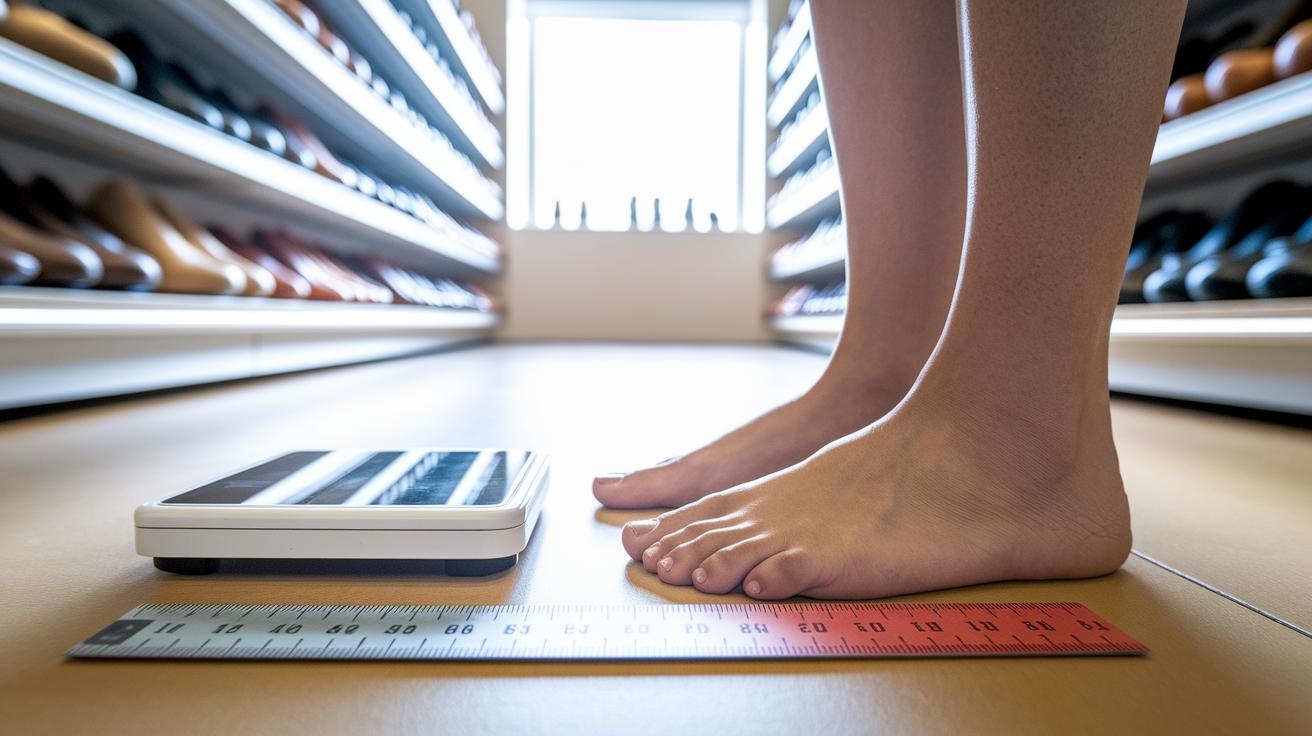
Experts say you should measure your feet once a year and again before buying new shoes. Your feet change over time, and even a small shift in length or width can make the difference between a comfortable fit and a pair that needs to be returned.
Many shoppers skip this step and end up with shoes that feel too tight or too loose. One tester said, "I assumed my old size would work as always, but I was surprised when my feet had grown slightly wider." This simple mistake can lead to shoes that slip at the heel or feel off during movement.
Always use the same method for each measurement. You can use a printed template or a digital shoe calculator (a tool that uses data from many brands). Following current best practices in shoe fit can help you avoid returns and keep your feet comfortable.
Final Words
In the action, this article walked through measuring your feet with a paper-and-pen method, comparing regional size charts, and checking heel lock for a secure fit. It even covered adjustments for children's shoes and the use of digital tools like a shoe calculator.
Each step in our shoe sizing guide aims to reduce errors and returns by making your measurements precise. Enjoy making confident choices with these simple, practical tips.
FAQ
What is a women’s shoe sizing guide?
The women’s shoe sizing guide explains how to measure foot length and width, compare regional size standards, and use conversion charts for correct fits. It offers printable charts for at-home sizing.
What is a men’s shoe sizing guide?
The men’s shoe sizing guide details measurement methods, conversion between US, EU, and UK sizes, and expert advice on fit. It includes printable charts and tools for accurate sizing.
How does the conversion from US size to EU size work?
The conversion from US to EU sizes uses charts that map specific foot measurements. This helps guide shoppers when selecting shoes that follow different regional size standards.
What is a shoe size conversion chart?
A shoe size conversion chart lists sizes across regions like US, EU, and UK. It maps foot measurements to corresponding sizes, minimizing the risk of a poor fit.
Where can I find a printable shoe size chart PDF?
A printable shoe size chart PDF is available online, offering a clear, easy-to-use guide that you can download and print for accurate at-home foot measurements.
How do I convert Euro shoe sizes to US women’s sizes?
Converting Euro sizes to US women’s sizes involves using charts or digital tools to map specific measurements. This process provides equivalent size measurements for confident purchasing.
How can I get a printable shoe size chart for adults?
Printable shoe size charts for adults offer conversion details and step-by-step measurement instructions. Many are available free online to help you determine your correct size.
Is there a free printable shoe size chart available?
A free printable shoe size chart can be downloaded online. It provides clear measurement instructions and conversion data to help you accurately select your shoe size.
How do I figure out what my shoe size is?
Figuring out your shoe size involves measuring your foot’s length and width at their fullest, recording the dimensions, and using a conversion chart to determine the right size.
Is size 7 a 37 or 38?
A US size 7 typically does not directly equal a 37 or 38 Euro size; conversion charts are needed since sizes vary by brand and specific measurement details.
Is a 38 the same as a size 7 or 8?
A 38 Euro size generally correlates with a US 7 or 8, but brand differences can affect the match. Check conversion charts to be sure of the precise fit.
What is the EU shoe size in the US?
EU shoe sizes are converted to US sizes using charts that match specific foot measurements with corresponding US standards, providing a clear size comparison for buyers.