

Ever wonder if your clothes are fooling you with confusing size charts? Our guide breaks down S, M, and L sizes in both inches and centimeters so you can see the difference clearly.
We show you how to measure your chest, waist, and hips (just like a pro) so you won't have to guess your size. The tips are simple and the table is easy to follow.
This handy chart makes finding your true fit a breeze. Give it a look and shop with confidence.
Small Medium Large Size Chart: Clear, Simple Comparison
Below is the table with easy S, M, and L measurements in inches and centimeters:
| Size | Chest (in / cm) | Waist (in / cm) | Hips (in / cm) |
|---|---|---|---|
| S | 32–34 / 81–86 | 28–30 / 71–76 | 34–36 / 86–91 |
| M | 36–38 / 91–97 | 32–34 / 81–86 | 38–40 / 97–102 |
| L | 40–42 / 102–107 | 36–38 / 91–97 | 42–44 / 107–112 |
Here are a few quick tips for taking your measurements:
- For the chest, wrap the tape around the fullest part. Think of it like measuring a soft, round pillow.
- For the waist, find the narrowest spot right below your rib cage and keep the tape snug but not too tight.
- For the hips, measure the widest part of your bottom to get a true fit.
With this clear guide, all you need to do is compare your own measurements to the table. This simple process helps remove any guesswork when you shop.
One last tip: treat your tape measure like a good friend. Keep it level and take a steady breath when you start. This way, you get the most accurate reading possible.
Small Medium Large Size Chart for Men's and Women's Apparel

This section breaks down how to take measurements for men's and women's clothing. Getting your measurements right helps you pick the best fit.
For men's tops, measure the chest at its fullest point with the tape level. When measuring bottoms, find the narrowest part of your waist just below the rib cage. The inseam is measured from the crotch to the hem. For example, polos usually fit true-to-size while some other tops can have a looser feel.
Women should measure their bust at its fullest, keeping the tape straight across. The waist is best measured at the narrowest area, usually above the hip bone. Because of these differences, the same size label may not mean the same fit in men's and women's styles. Always check the gender-specific guide when shopping online.
| Gender | Size | Chest/Bust (in / cm) | Waist (in / cm) |
|---|---|---|---|
| Men | S | 36–38 / 91–97 | 30–32 / 76–81 |
| Women | S | 34 / 86 | 26 / 66 |
Use these methods for both tops and bottoms to make sure you pick a size that fits well.
Conversion Guidelines in Small Medium Large Size Chart
When you convert measurements, keep in mind that one inch equals 2.54 centimeters. For example, a 38-inch chest is about 96.5 centimeters. This helps you switch between size systems easily.
Different regions use different labels. In Europe, a small is EU 46, medium is EU 48, and large is EU 50. In the U.S., sizes follow standard dimensions, and the UK and Japan have their own twists. Always double-check the numbers when buying from abroad.
Here are a few simple tips:
- Use a good tape measure for accurate numbers.
- Lay the tape flat. For example, measure the fullest part of your chest and keep the tape parallel to the floor.
- Compare different conversion charts when switching between U.S. and European sizes because small differences can occur.
By following these tips, you can match sizes right across different regions, making online shopping and returns much easier.
Extended Small Medium Large Size Chart for Youth and Kids

Getting the right size for kids is key. For youth sizes (ages 10 to 12), the chest should measure 30 to 32 inches (76 to 81 centimeters) and the waist 24 to 26 inches (61 to 66 centimeters). Measure the chest where it is fullest and keep the tape level and flat. For the waist, find the narrow spot just below the ribcage.
For smaller kids (ages 4 to 6), height and weight are big clues. Kids S fits children who are 40 to 45 inches tall (102 to 114 centimeters) and weigh about 35 to 45 pounds (16 to 20 kilograms). Use the same measuring methods as you would for adults, but remember that height is the main guide here.
| Category | Measurement | Value |
|---|---|---|
| Youth S (Ages 10-12) | Chest | 30-32 in / 76-81 cm |
| Youth S (Ages 10-12) | Waist | 24-26 in / 61-66 cm |
| Kids S (Ages 4-6) | Height | 40-45 in / 102-114 cm |
| Kids S (Ages 4-6) | Weight | 35-45 lbs / 16-20 kg |
These clear guidelines help you choose clothes that fit as kids grow.
Advanced Online Shopping Tips
When you shop online, pay close attention to reviews. Many shoppers point out that a medium in one brand might feel more like a large in another.
- Look for detailed reviews that highlight common fit issues.
- Check if reviewers mention how the fabric behaves (for example, a knit may stretch and feel more relaxed, even if it's designed to be slim).
- Read about the seller's return or exchange policies. Free or hassle-free returns can be a lifesaver if the fit isn't right.
- Take note of how reviewers describe the garment's drape and movement. One review even said, "The jacket flowed like a soft robe, despite being advertised as a structured fit."
- Remember that different clothing styles can affect how a piece fits. Slim-fit designs might feel tighter than relaxed ones, even when they're the same size.
Here's an interesting fact: Some reviews noted that a brand's 42-inch chest rating can vary by up to two sizes across different labels.
Plus and Extra Large Insights in Small Medium Large Size Chart
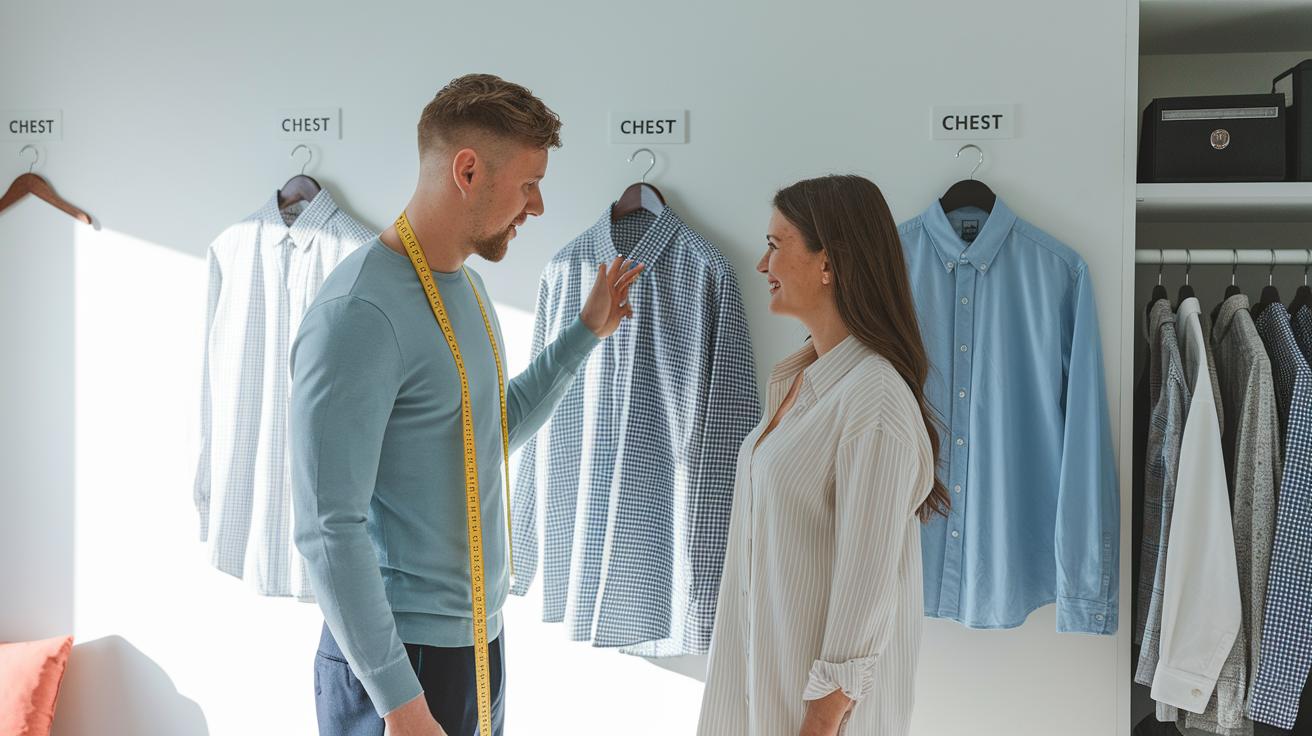
XL sizes usually work best if your chest measures about 42 to 44 inches (107 to 112 cm) and your waist runs around 36 to 38 inches (91 to 97 cm). When upgrading from large to XL, check your gauge measurements. If your regular size feels a bit tight in the chest, an XL might give you the extra room you need without feeling too loose.
If you want even more space, XXL might be the answer. It fits a chest of roughly 44 to 46 inches (112 to 117 cm) and is a good option if XL still feels restrictive. This is especially true for broader builds or if you want a looser fit for added comfort during physical activity.
Different styles can change what size is ideal. For example:
- If you lean toward a slim-fit look, stick closely to your measured numbers.
- If you like an oversized style, you might even size down slightly to get a relaxed, draped feel.
Keep these guidelines in mind as you match your measurements to find a comfortable and confident fit.
Final Words
In the action, we broke down every detail, from accurate S/M/L measurements for adults and youth to conversion tips across sizes and regions. Each segment explained clear methods to measure chest, waist, and hips. We even shared tips to tackle online shopping with an easy checklist. This review gives you a reliable small medium large size chart that makes comparing brands and fits straightforward. Enjoy confident buying knowing you have the right info to pick styles that truly work for you.
FAQ
What do women’s and men’s S/M/L size charts measure?
The S/M/L charts provide chest, waist, and hip measurements in inches and centimeters so you can match your body dimensions to the right fit for both genders.
Is a men’s size 34 a medium or large?
A men’s size 34 is most commonly considered a medium, though measurements vary by brand and garment style. Always check specific measurement details for the best fit.
What does a size 40 indicate in apparel for pants or shirts?
A size 40 usually falls into the large range for both pants and shirts, as many charts list medium sizes below 40. Check measurements to verify the exact fit.
What does a medium size in number mean for ladies?
A medium in women’s numbers generally aligns with average bust, waist, and hip dimensions. Referring to the chart helps ensure you choose the right measurement for your shape.
Is size 32 small or medium?
Size 32 is typically classified as small in most charts. However, brands may differ, so it’s wise to compare your own measurements to the chart.
What is the Lululemon size chart?
The Lululemon chart lists precise measurements for chest, waist, and hips. It’s designed so that you match your measurements to their guide for an optimal, comfortable fit.
What do small, medium, and large sizes mean?
Small, medium, and large denote specific measurement ranges for body parts. For example, a small might have a chest of 32-34 inches, while a large measures about 40-42 inches, though each brand’s guide may vary.
Which size is small, S or L?
S represents small, and L represents large. These letters are universal cues to help shoppers quickly determine a garment’s overall fit.
What are the different types of sizes?
Sizes can be expressed as letters (S, M, L), numbers (like 32, 34, 40), or regional standards. Each system uses specific body measurements to guide the proper fit.