

Ever wondered how a plain runway can become an exciting event? This post shares smart production ideas that mix style and strategy every ten minutes. Careful planning makes room for smooth scene changes and memorable look reveals while keeping costs low. We break down simple, clear steps that help teams work together to highlight every planned outfit. Read on to see how thoughtful production can turn a designer's idea into a live stage show.
Stage Fashion Show Planning: Essential Steps for Success
Good planning is the backbone of a stage fashion show that works well. A clear plan helps everyone on the team, from stylists and sound engineers to technical assistants and make-up directors, know exactly what to do. With a tight ten-minute catwalk, every detail must help tell the designer's story, making smooth transitions between 24 to 70 scheduled looks. The plan makes sure key moments, like the opening and closing sequences, really stand out to the audience.
A detailed plan also keeps the budget in check. Shows can cost anywhere from $100,000 to $1 million, with main expenses like venue hire, lighting, catering, and talent fees. Often, sponsors or internal funds cover these costs since ticket sales are not the main revenue source. By planning early, every moving part, from casting directors to PR teams and technical crews, fits together to support the overall vision.
- Concept development
- Budgeting
- Team assembly
- Venue selection
- Runway layout design
- Model casting
- Technical rehearsals
- Promotional strategy
Getting the show's length and number of looks right is key to meeting marketing goals. A ten-minute presentation is enough time to show off a designer's brand while grabbing media and retail buyers' attention. Balancing a short, focused show with a strong selection of looks creates an event that is both visually appealing and smart with money. This careful planning not only strengthens the designer's narrative but also leaves a lasting impression on everyone watching.
Stage Fashion Show Layout and Venue Design Inspirations
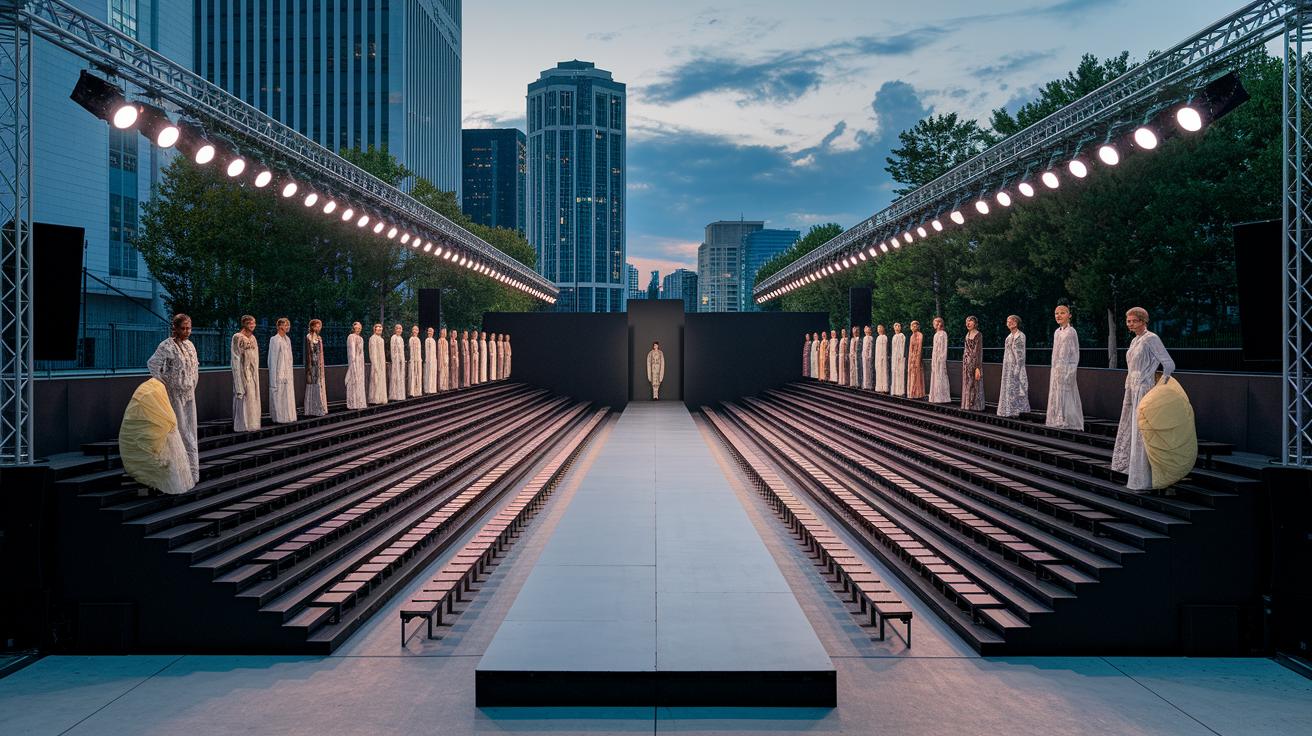
Choosing a venue and layout can turn a fashion show into a memorable event. The right space sets the mood, guides the audience, and helps every outfit stand out. A classic runway with a long, straight track and tiered seating gives a full view so that each detail is clear. Designers have been creative with unique spaces to spark interest and support their show themes, whether by using outdoor areas with natural challenges or city spots that feel modern and artistic.
| Venue | Designer/Event | Key Feature | Challenge |
|---|---|---|---|
| Manhattan Pier | Tommy Hilfiger NYFW 2016 | Boardwalk, carnival theme | Outdoor logistics |
| Roosevelt Island | Yeezy | Urban outdoor runway | High-temperature conditions |
| NYC Marble Cemetery | Tracy Reese | Historic and moody backdrop | Space limitations |
| Madison Ave (71st–72nd St) | Ralph Lauren | Glass atrium runway | Urban street closure |
Putting these ideas into practice means looking at a space's indoor or outdoor traits and matching them with the show goals. Indoor venues offer steady lighting and a controlled climate, which allows for detailed floor arrangements and careful staging. Outdoor spaces require smart fixes to beat heat and changeable weather while still telling a strong visual story. Whether it's a modern glass atrium or an old cemetery, thoughtful design choices bring a designer's vision to life.
Stage Fashion Show Lighting and Audio-Visual Integration
Good lighting is a must for any stage fashion show. A well-set light keeps colors true and shows every fabric detail. When the rigging is done right and the venue has enough space, the designs really stand out. Modern lighting and professional AV gear work together to match the music with the runway moves, making each look stand out. Live streaming on platforms like Facebook Live brings this quality show to viewers at home. This complete setup ties the designer's vision together in a bright and engaging way.
- Light intensity and color temperature
- Rigging height and load capacity
- Moving fixtures and patterned gobos
- Backlighting and side lighting
- Syncing with sound
- Camera angles for live streams
- Backup power and redundancy
Choosing smart lighting and AV vendors is key. Experts in custom light setups and visual effects can fix problems quickly and keep the show on track. Their know-how makes sure that every lighting cue, sound beat, and camera angle works hand-in-hand, boosting production value and keeping both the live and online audiences fully involved.
Stage Fashion Show Backstage Production and Logistics
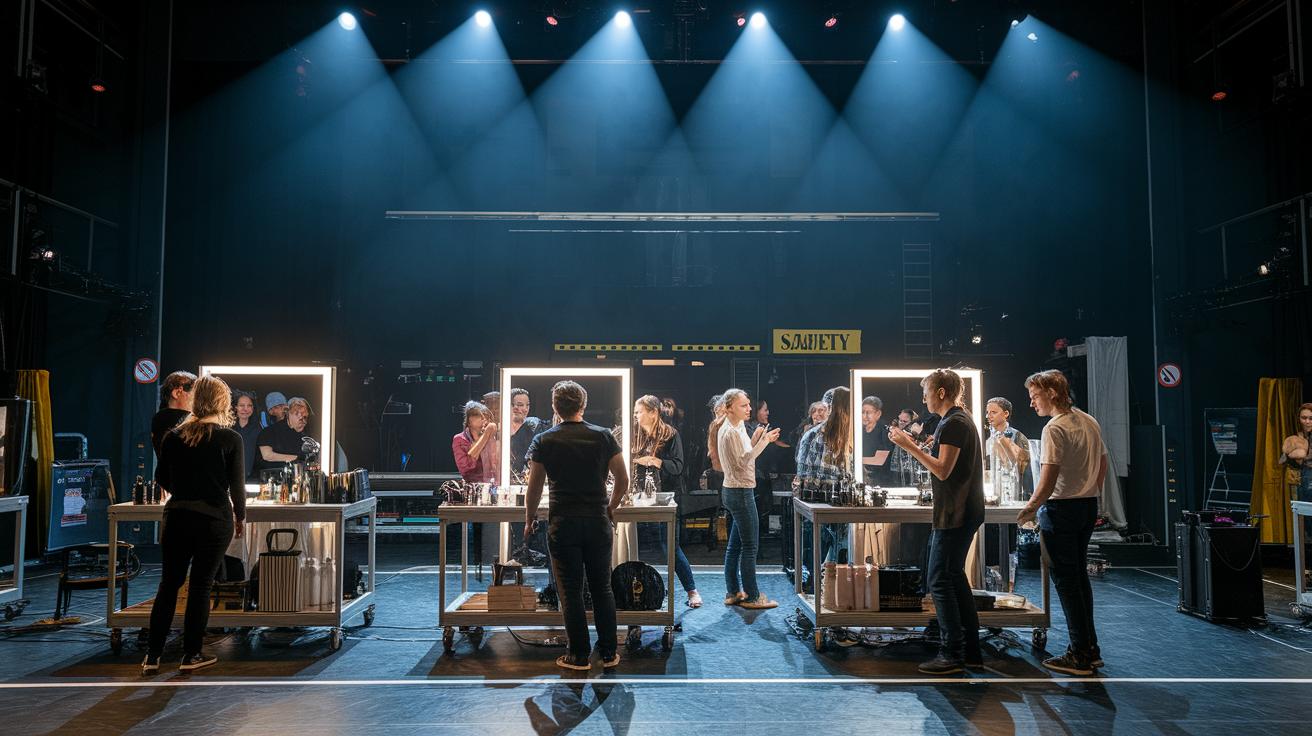
Backstage production kicks off with a team that has a clear plan and well-defined roles. A hair and make-up team can include up to 50 stylists and 35 artists, all working under one director. They join forces with the casting director, PR staff, graphic designers, seamstresses, caterers, security, lighting techs, and runners. Every role follows set safety standards and clear instructions so risks are kept low during a fast-paced live show. With strong leadership, everyone knows how to deal with surprises while keeping the show running smoothly.
Model casting plays a big role in setting the pace of the show. Designers can plan between 24 and 70 looks with extra care for the opening and closing acts. The casting director carefully schedules each model to make sure the most important looks come at the right time. This precise timing lets the team handle last-minute changes without throwing off the rhythm of the show.
Backstage work is adapted to match the event’s main focus. For high-impact media shows, fast changes and bold visual cues are key. For retail-driven events, the pace is slower so each look can be enjoyed and the audience can feel more connected. This thoughtful coordination means that whether the audience is watching live or through media, the performance stays exciting and smooth.
Stage Fashion Show Budgeting and Sponsorship Strategies
Every stage fashion show has many costs that need close attention. The biggest expenses include renting the venue, arranging food and drinks, hiring sound and lighting equipment, setting up decorations, and paying the models. Budgets can start around $100,000 for small productions and may rise to $1 million for top-tier shows. Since these costs add up fast, keeping a careful budget is key. New brands sometimes bundle services to score discounts on rentals and staffing, which helps control spending while still delivering a powerful event.
Since ticket sales rarely cover the full amount, most shows depend on sponsors and internal funds. Designers team up with local rental and hire companies to get budget-friendly equipment without cutting quality. When reaching out to sponsors, it helps to point out that the event will draw media attention and online buzz. A good sponsorship package shows benefits like high visibility at the event and opportunities for digital streaming, making it a win-win for partners.
Paying models and talent is another important part of the budget. New or lesser-known talent usually charges a fixed fee, which makes costs easier to predict. In contrast, well-known models or celebrities may ask for fees up to $100,000. Clear communication and detailed contracts help everyone understand the budget and expectations. By hiring emerging talent at a consistent rate, more funds remain for other important parts of the production.
Stage Fashion Show Audience Engagement and Flow
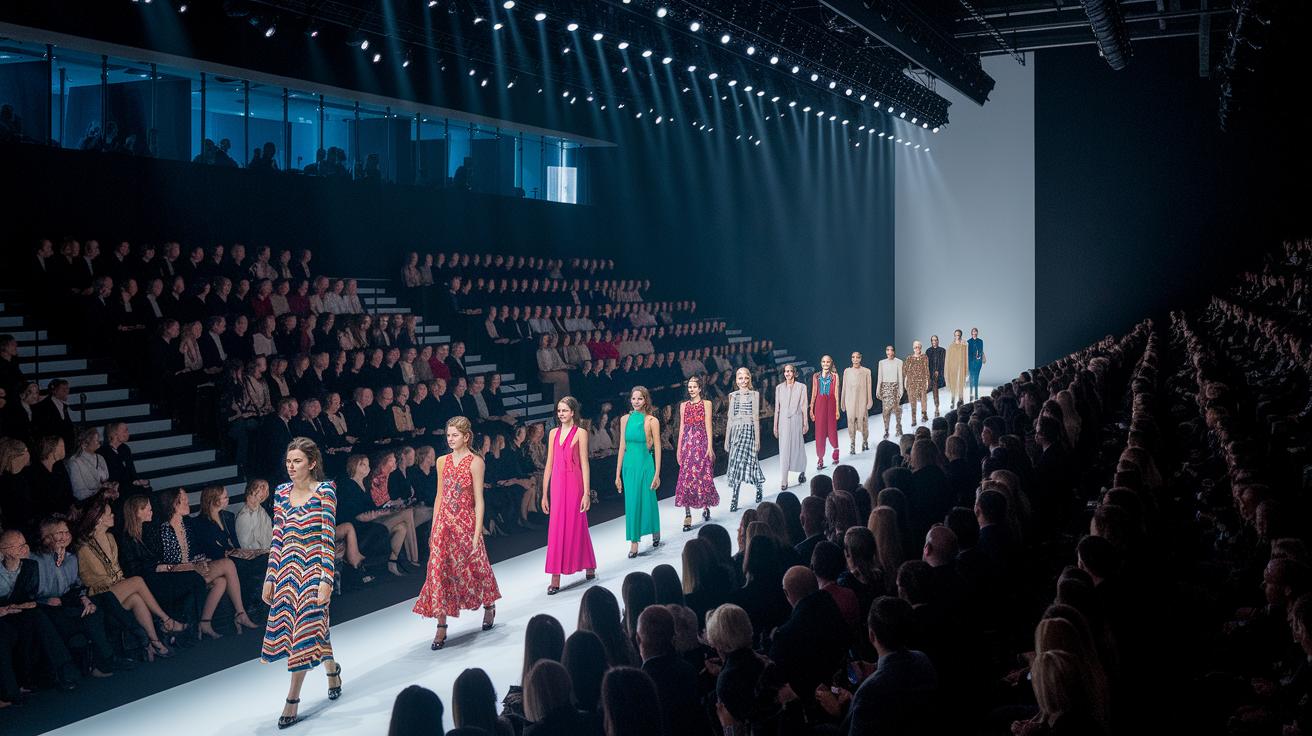
A ten-minute show finds just the right mix of pace and storytelling so every outfit gets its moment. The seating is set up in tiered rows to give a 360° view that keeps eyes focused on the runway all the time. Arranging seats to cut down on distractions and keep a clear view means the audience never misses a detail. This smooth flow acts like a guide, keeping the energy high as each model and outfit hits the stage in sync with the show.
VIP treatment plays a key role in making the event feel extra special. Special lounges, reserved seating for influencers and editors, and private access areas help guests feel important and close to the action. Adding live-streaming and digital overlays means people watching online can join in, with real-time social media updates keeping everyone connected. Pop-up retail spots and interactive floor plans further involve both in-person guests and online viewers, turning the runway show into a fully immersive experience.
Stage Fashion Show Backdrops and Decorative Themes
Backdrops help keep the focus on the clothes and models by hiding backstage chaos. They set the tone for the show and tie every part of the performance together. A good backdrop makes the whole space look more connected and smooth.
Designer Tomo Koizumi did this perfectly. He turned the dressing area into a bold part of the show that adds a surprise twist. This creative move makes the backstage scene feel like a part of the overall art, blending privacy with style.
When you choose materials and themes, keep the season in mind. Consider fabric textures, color choices, and shapes that work well now. For a modern look, go with a simple, clean design. If you want more drama, try using rich, carnival-like motifs. Mix and match elements to turn your backdrop into a strong visual feature that hides distractions while adding to the event’s story.
Final Words
In the action, we broke down each phase of planning, from concept development to backstage logistics, so you can steer your event smartly. We covered budget setups, venue design, and technical details that directly impact a runway event showcase.
Every insight aims to cut sizing errors and buyer's remorse, just as a well-executed stage fashion show balances cost, quality, and style. This guide leaves you feeling ready and confident to stage your next big event.
FAQ
What are some fashion show stage design ideas, layouts, and backgrounds including architectural plans?
The stage design covers the runway, seating area, and backdrop. It combines layout, background, and structural plans to create a dynamic setting that highlights the garments.
How is the size of a fashion show stage determined?
The stage size is set based on venue capacity and event requirements. Designers plan dimensions that allow smooth movement and clear audience views, ensuring an effective presentation.
What are the options for renting or buying a runway stage?
Rentals offer a professional, ready-to-use setup while purchasing provides a long-term, customizable stage. Both options meet event needs and can be tailored to fit the design vision.
What decoration ideas work for a school fashion show?
School fashion shows can use creative themes like carnival or minimalist designs. These ideas blend academic style with playful elements, making the event engaging and memorable.
What is a fashion show stage called?
A fashion show stage is often called a runway or catwalk. The term underscores its role as the platform for models to showcase designs with clear pathways and planed seating.
How can one stage a fashion show successfully?
Staging a fashion show means planning layout, coordinating models, lighting, and timing. Start with a clear idea, build a supportive team, and rehearse to ensure a smooth and engaging flow.
What are the big 4 fashion shows?
The big 4 fashion shows usually refer to New York, London, Milan, and Paris Fashion Weeks. These events host top designers and set key trends for each season.
How should a model walk on stage during a fashion show?
Walking on stage means keeping smooth, measured strides with good posture and confidence. Models should practice engaging the audience and cameras while ensuring the garments are showcased well.