

Quick Verdict: Your favorite accessories are safe when made to strict standards.
Why It Matters:
Ever wonder if your cherished bracelets or belts hide secrets about safety and quality? Many people ask how a simple accessory can follow tough rules without missing a beat.
What the Standards Do:
Rules like EU REACH (which checks for harmful chemicals) and US CPSIA (which sets safety guidelines for products) make sure each piece is safe and well made. These rules stop bad chemicals from getting in and help keep every stitch precise.
How It Protects You:
When these standards are met, you can enjoy your style with peace of mind. Knowing your accessories pass strict safety tests means you can focus on looking good without worry.
In Short:
Quality standards prove that safety and precision can work together to protect your style and well-being.
Key Quality Standards and Certifications for Fashion Accessories
Quality rules matter because they set out clear steps to make safe and reliable accessories. They help manufacturers keep harmful chemicals, like SVHCs (substances of very high concern, chemicals that might be dangerous), under strict limits. This way, every accessory, from bracelets to belts, needs to meet tough international rules. Standards such as EU REACH and US CPSIA make sure products are safe while keeping problems like loose trims or uneven finishes away.
Global quality standards build trust with buyers and guide makers through busy supply chains. Clear certifications give everyone, from the factory floor to the boardroom, a shared way to talk about quality. With set protocols, brands can spot issues quickly and avoid expensive recalls. Standards like ASTM F2923-14 for children’s jewelry and CARE labeling for care instructions keep the process transparent and efficient.
| Certification | Region | Key Focus |
|---|---|---|
| EU REACH | Europe | Keeps over 219 SVHC chemicals in check so products touching skin are safe |
| US CPSIA | United States | Limits lead below 100 ppm and controls phthalates |
| ASTM F2923-14 | US/EU | Sets safety rules for children’s jewelry |
| CARE Labeling | Global | Gives clear care instructions to keep accessories looking good |
Working with compliance experts helps brands simplify the process. These specialists steer the testing and certification through ever-changing rules. Their guidance cuts risks, lowers costly rework, and builds a brand you can trust in a competitive market.
Material and Safety Testing Procedures for Fashion Accessories

We start by checking the raw materials. Factories test recycled polyester parts using simple tests like fiber strength tests, colorfastness checks, and PFC screening (PFC means harmful chemicals). This step makes sure the materials are solid and free from defects before production.
Next, during production, quality checks happen as the items are made. Inspectors monitor chemical levels by comparing phthalate and heavy metal levels against US and EU safety limits set by rules like CPSIA and REACH. Ongoing tests catch issues early, such as ensuring nickel release stays below 0.5 µg/cm² per week.
The final step is a pre-shipment check. Both lab and on-site tests confirm that each accessory meets eco-friendly standards like GRS and Oeko-Tex Standard 100. This last review makes sure everything is safe and durable for you.
| Test | Description |
|---|---|
| Fiber strength tests | Verifies the fabric’s durability and resilience |
| Colorfastness checks | Makes sure color stays bright without fading |
| PFC chemical screening | Detects harmful chemicals in the materials |
| Nickel release evaluations | Measures nickel release to help prevent skin issues |
Durability and Performance Benchmarks in Accessory Production
Durability tests help ensure that accessories stand up to everyday use without losing their look or function. They check if an item holds up well even after a lot of wear. These tests catch problems like uneven dye or weak seams early so manufacturers can improve the product.
Here are a few common tests we see:
- Abrasion resistance tests (ASTM D4966) rub the fabric to see if it wears away too fast.
- Seam strength tests (ISO 13935-2) check how well the stitching holds under strain.
- Colorfastness tests make sure the fabric color stays even and bright over time.
- Tarnish resistance tests use special aging chambers with moisture and salt to see if metals keep their shine.
- Fatigue cycling tests repeat actions like opening and closing zippers and buttons to confirm they last.
These tests tell us a lot about an accessory's endurance. When an item scores high, it means it should keep looking good and working well in normal use. Lower scores suggest there might be issues that could lead to early wear. This testing approach helps brands fix weak spots right away so their products last longer and keep their appeal.
Industry Best Practices and Compliance Guidelines for Fashion Accessories

We use two methods to keep accessories in check. Quality assurance (QA) plans out steps to stop defects, while quality control (QC) checks the finished items for any issues. This way, every accessory meets our strict guidelines and works reliably, safely, and well.
Top manufacturers use three main checks. Before production starts, teams check raw materials and measurements (technical specs are the product details) to build a strong foundation. During production, simple checklists and periodic reviews help catch problems as they come. Finally, before shipping, a last check is done, even during container loading, to make sure every item meets quality standards.
Regular audits are key to maintaining high quality. Audits like checking supplier quality, evaluating factories, and reviewing social and environmental practices all help keep quality consistent. Ongoing training for inspection teams boosts their ability to spot defects and keeps customers happy, while partnering with expert QC firms can reduce returns and build trust in the brand.
Want to know more? Visit our insider's guide to checking accessory quality: https://jankreviews.com?p=1601
Understanding quality standards in fashion accessories: Proven Excellence
Many brands now check every step of their production to make sure their accessories meet high quality and sustainable standards. They use sustainable sourcing audits and eco-certifications to prove that their materials come from responsible sources. This means they keep track of where each fiber and recycled blend comes from by following simple guidelines from systems like GRS (Global Recycled Standard, which measures recycled content).
Checking a fabric's recycled content is as easy as looking at its certification report. Certifications like Oeko-Tex 100 and bluesign make sure that the production methods use fewer harmful chemicals and have a low environmental impact. Brands use these certifications to assess not just the final product but every step from raw material to finished accessory. This system builds trust with buyers by making sure each stage sticks to sustainable practices.
Producers also take a close look at the supply chain and overall environmental effects. Suppliers fill out self-assessments, and third-party audits verify that practices meet environmental benchmarks such as water usage, carbon emissions, and chemical discharge during dyeing. Many brands now explore greener fabric alternatives that create less environmental harm. Regular reviews of these factors help companies find ways to improve and show clear progress over time. This detailed approach ensures that accessories meet strict ethical and environmental standards while supporting a cleaner, more sustainable fashion industry.
Practical Case Studies of Quality Assurance in Fashion Accessories
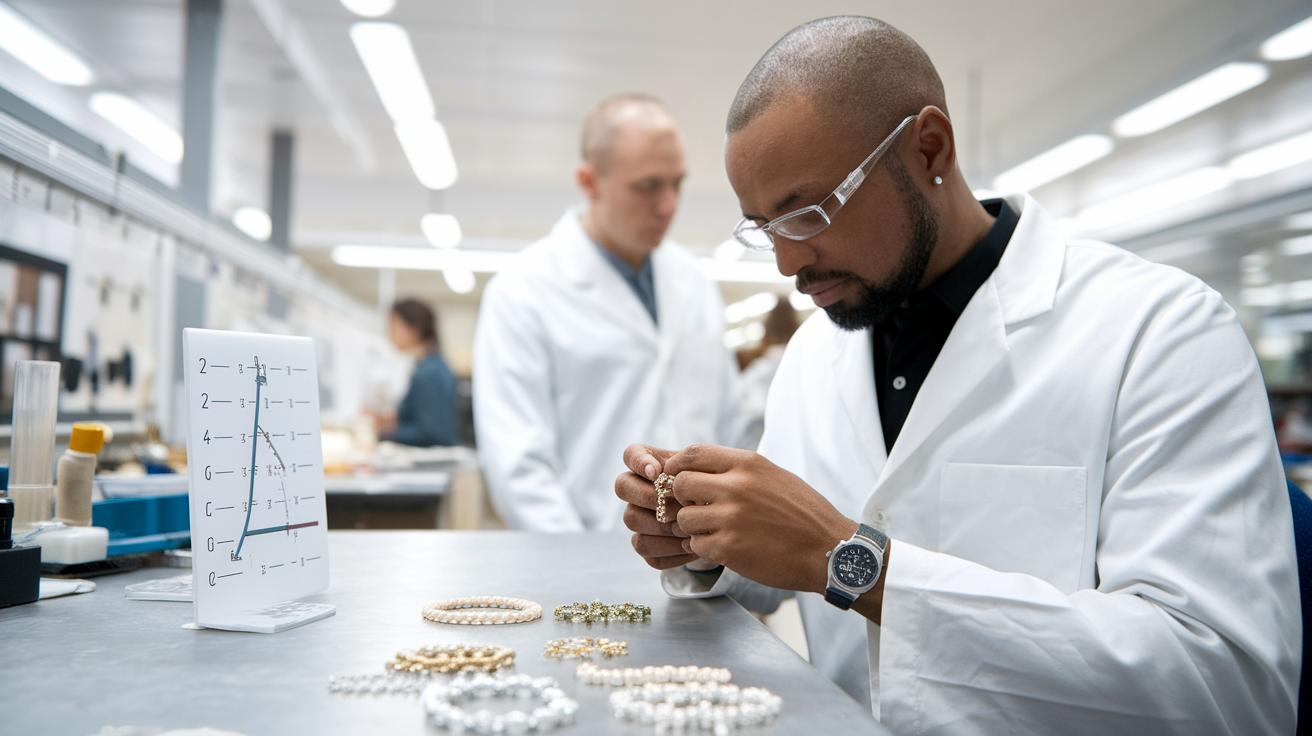
A jewelry brand faced repeated recalls because of safety and quality problems. They fixed this by using ASTM F2923-14 testing (a set of safety and quality rules) with a trusted outside lab. This method helped them spot issues early, so every piece met strict safety checks. In the end, recalls stopped and customers trusted the brand more.
A luxury handbag maker had trouble with fabric flaws, wrong measurements, and loose trim attachments. They created a detailed quality check list to inspect fabrics, verify measurements, and secure the trim. This simple process cut product defects by 30% and made production more reliable, which boosted the brand's reputation.
These examples show that a solid quality assurance program not only cuts down defects but also builds a stronger brand image that customers can count on.
Final Words
In the action, we broke down global safety checks, material tests, durability measures, best practices, sustainable sourcing, and real-life case studies. Each part showed how brands tackle quality and compliance from start to finish.
We learned that clear testing and standardized guidelines help deliver accessories that fit both the body and your budget. This insight paves the way for confident picks by enhancing your understanding quality standards in fashion accessories.
FAQ
Q: How do PDF guides help understand quality standards in fashion accessories?
A: PDF guides clearly outline quality benchmarks, compliance tips, and inspection procedures that help designers and buyers gauge the durability and style integrity of fashion accessories.
Q: How does a garment quality control PDF or checklist support the garment industry?
A: These documents offer step-by-step procedures for inspecting seams, trims, and overall construction, ensuring garments meet safety and quality benchmarks during production.
Q: What are the 7 QC tools in the apparel or garment industry?
A: The 7 quality control tools include cause-and-effect diagrams, check sheets, control charts, histograms, Pareto charts, scatter diagrams, and flowcharts, which streamline defect detection and process improvement.
Q: What information does an Apparel Quality Standards PDF provide?
A: An Apparel Quality Standards PDF details criteria on fabric, construction, and finishing, offering clear benchmarks that help maintain consistency in the final product’s look and performance.
Q: What is quality control in the garment industry?
A: Quality control in garment production refers to the systematic process of inspecting and testing fabrics, trims, and built structures to meet predefined quality standards before reaching the customer.
Q: How is a Quality Control PPT in the garment industry useful?
A: A PowerPoint presentation on garment quality control communicates key protocols, inspection stages, and regulatory standards in a visually engaging format for training or meetings.
Q: How can a garment quality control resume sample aid job seekers?
A: A resume sample highlights essential skills and experiences in quality assessment, inspection procedures, and compliance, helping job seekers stand out when applying for quality control positions.
Q: What is considered the standard of quality in fashion?
A: The quality standard in fashion is judged by durable materials, consistent construction, and performance that meets safety regulations, ensuring items look and feel right after repeated use.
Q: What are the two main classifications of fashion accessories?
A: Fashion accessories typically classify as functional items like bags and belts that offer utility, and decorative items such as jewelry that primarily add style to an outfit.
Q: What does QC mean in fashion?
A: In the context of fashion, QC stands for Quality Control, which encompasses the methods used to inspect and maintain high standards in production from design to final product.